
تقنيات الترجمة
Résumé de section
-
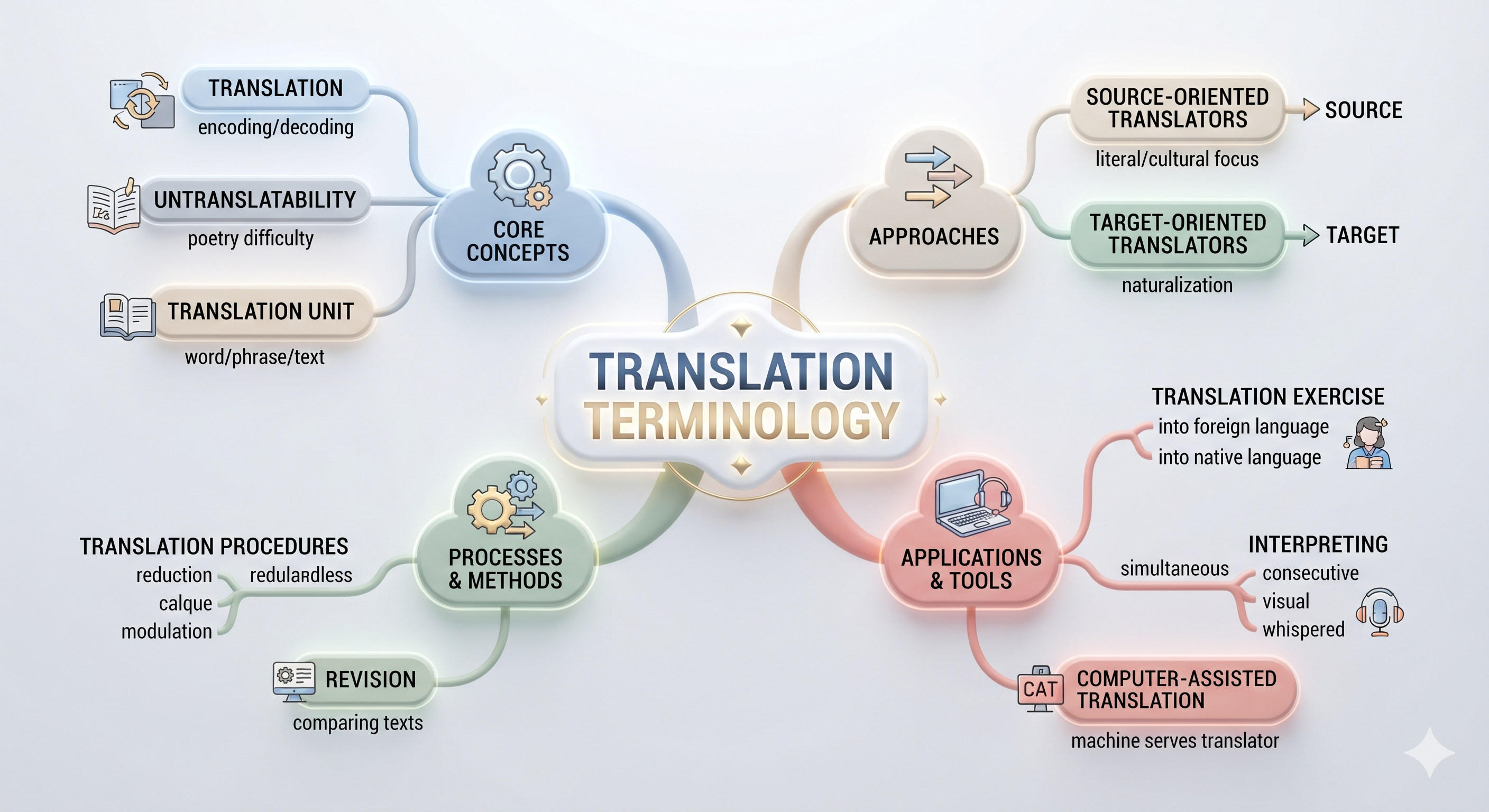 Brief Description
This lesson introduces the basic concepts of translation studies. It presents translation as a linguistic, cultural, and interpretive process, focusing on key notions such as source-oriented and target-oriented translation, untranslatability, revision, translation units, borrowing, translation procedures, interpreting, and computer-assisted translation.
Target Audience
Master 1 students in Modern and Contemporary Criticism.
General Objective
By the end of this lesson, students will be able to understand translation as a complex process involving language, culture, interpretation, and critical thinking.

-
Phase de remise ouverte : jeudi 23 juillet 2026, 12:12Phase d’évaluation fermée : jeudi 23 juillet 2026, 12:12Les étudiants doiventMarquer comme terminé
-
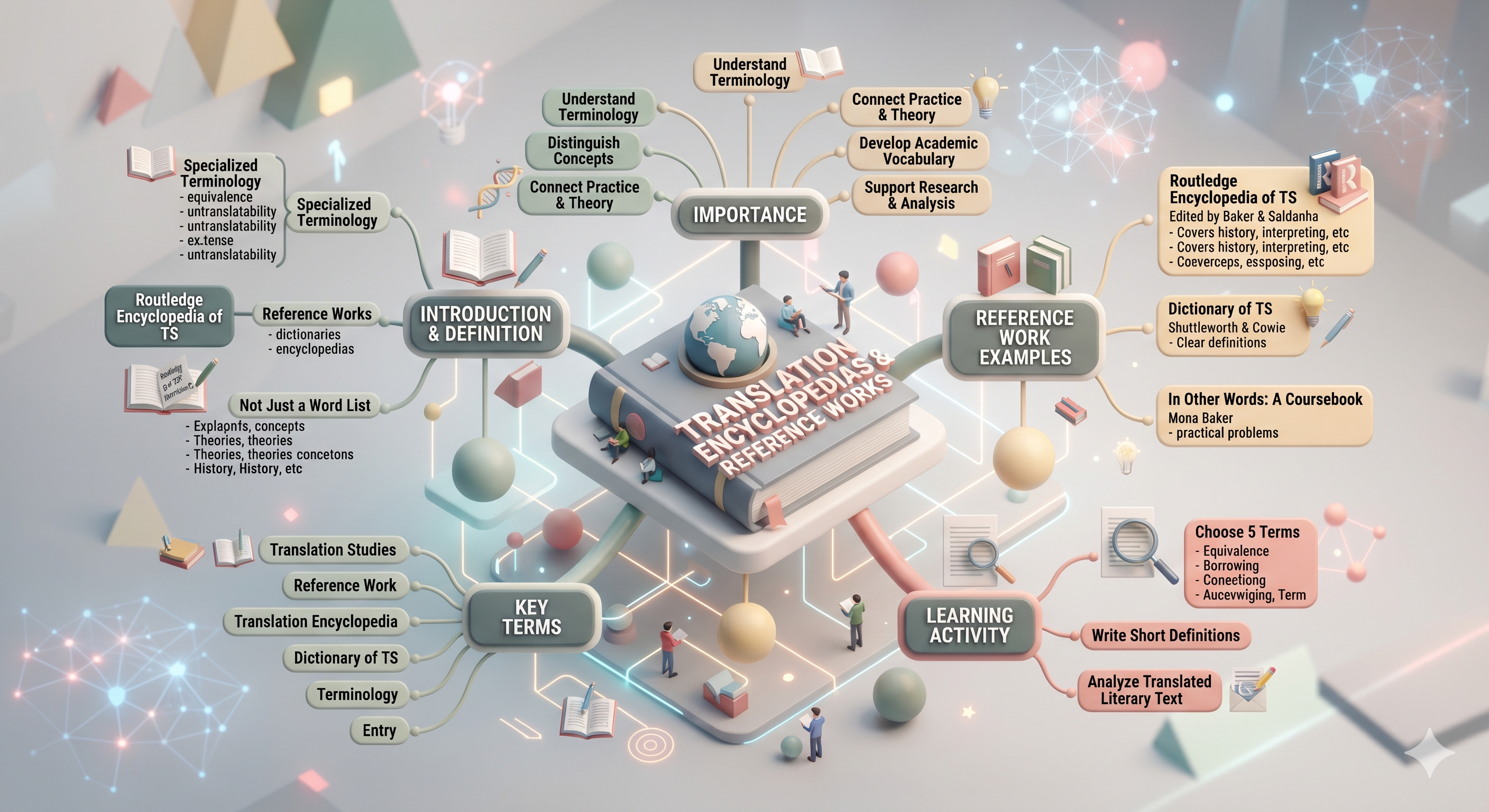 Brief Description
This course introduces students to translation encyclopedias and reference works used in translation studies. It explains the development of dictionaries and encyclopedias, their main types, and their importance in understanding translation terminology, concepts, and practices. The course also helps students use these tools critically in translation, terminology work, and textual analysis.
Target Audience
Master 1 – Modern and Contemporary Criticism
By the end of this course, the learner will be able to understand the role of dictionaries, encyclopedias, and translation encyclopedias in translation studies, and to use them critically as tools for translation, terminology, and textual analysis.

-
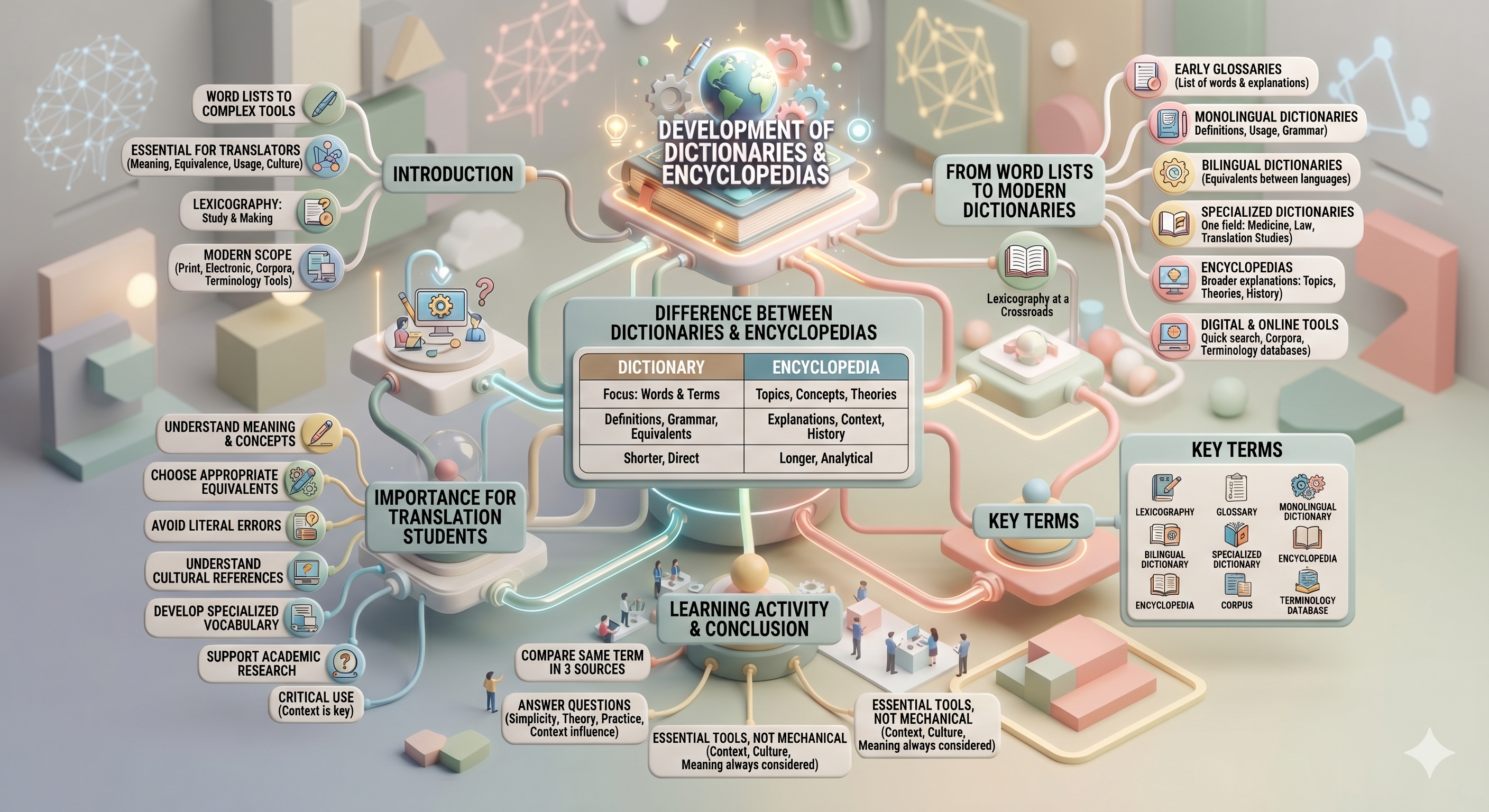 Brief Description
This course introduces students to translation encyclopedias and reference works used in translation studies. It explains the development of dictionaries and encyclopedias, their main types, and their importance in understanding translation terminology, concepts, and practices. The course also helps students use these tools critically in translation, terminology work, and textual analysis.
Target Audience
Master 1 – Modern and Contemporary Criticism
General Objective
By the end of this course, the learner will be able to understand the role of dictionaries, encyclopedias, and translation encyclopedias in translation studies, and to use them critically as tools for translation, terminology, and textual analysis.

-
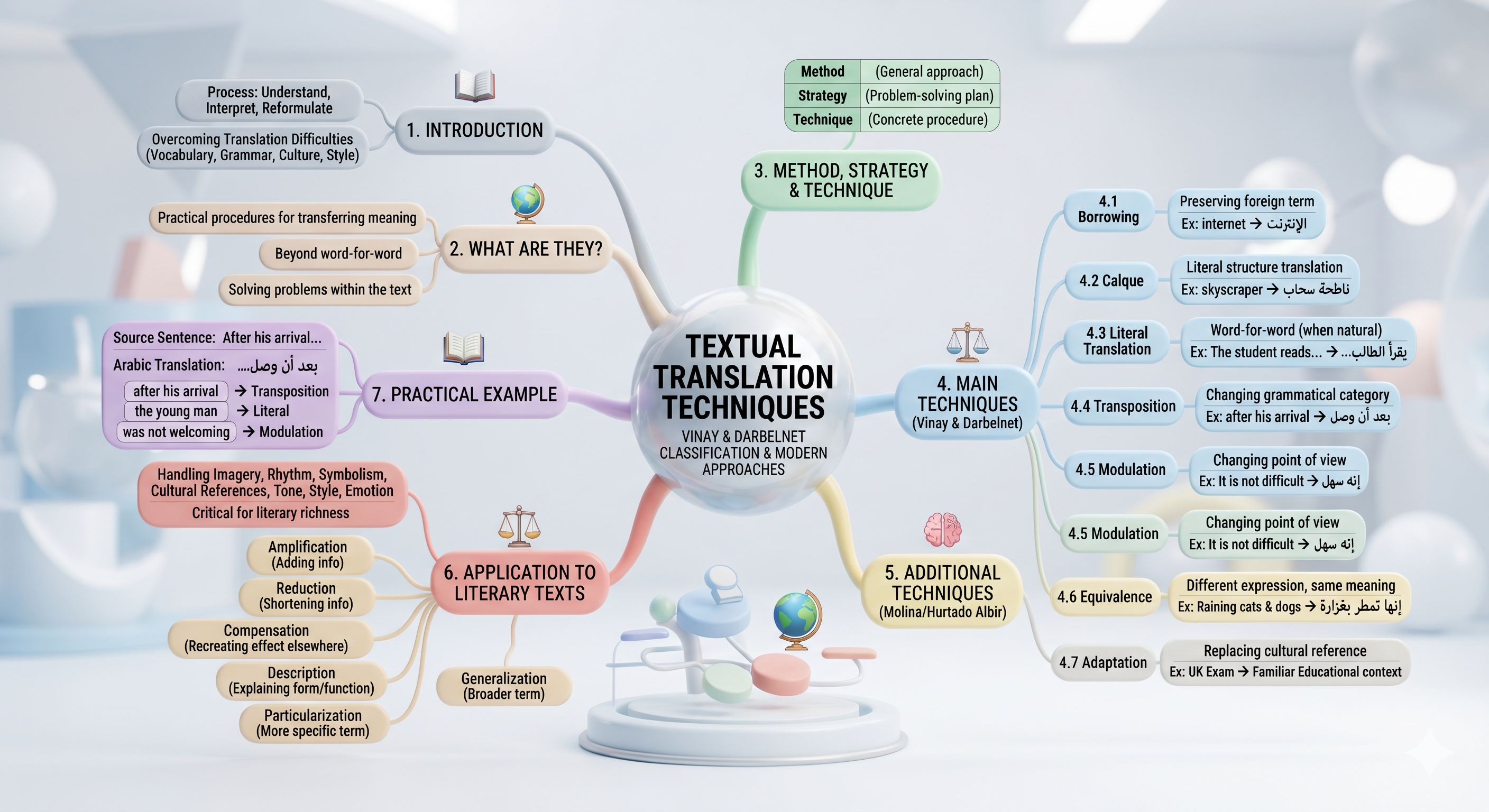 Brief Description
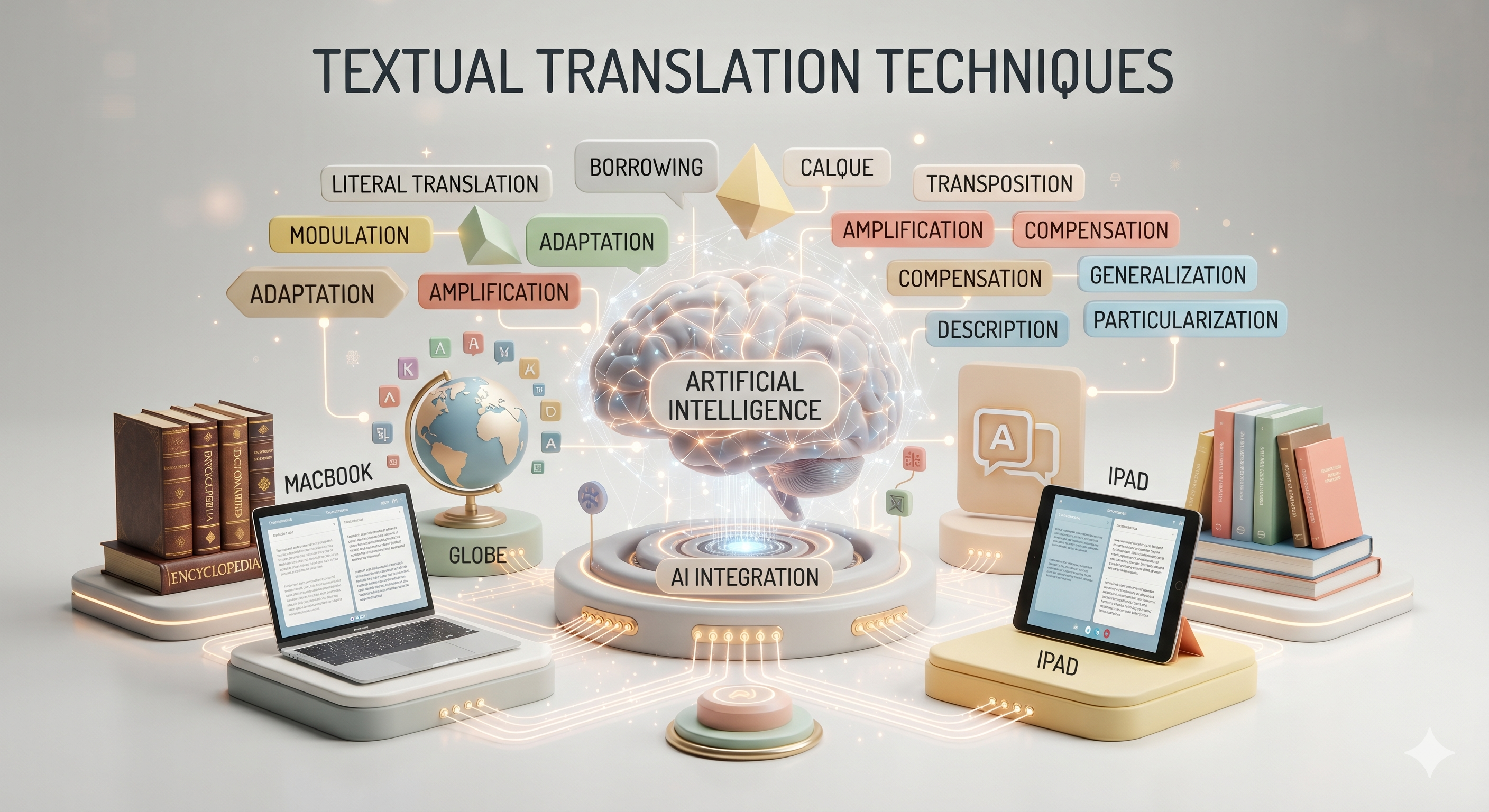
This lesson introduces the main techniques used by translators when working on texts. It explains how translators move from the source text to the target text by using procedures such as borrowing, calque, literal translation, transposition, modulation, equivalence, adaptation, amplification, reduction, and compensation. The lesson focuses on practical examples and short textual analysis in order to help students understand how translation choices are made.
Target Audience
Master 1 – Modern and Contemporary Criticism
General Objective
By the end of this lesson, the learner will be able to identify, explain, and apply the main textual translation techniques used to solve linguistic, stylistic, and cultural problems in translated texts.
-
Ouvert le : mercredi 24 juin 2026, 00:00À rendre : mercredi 1 juillet 2026, 00:00
-
 Brief Description
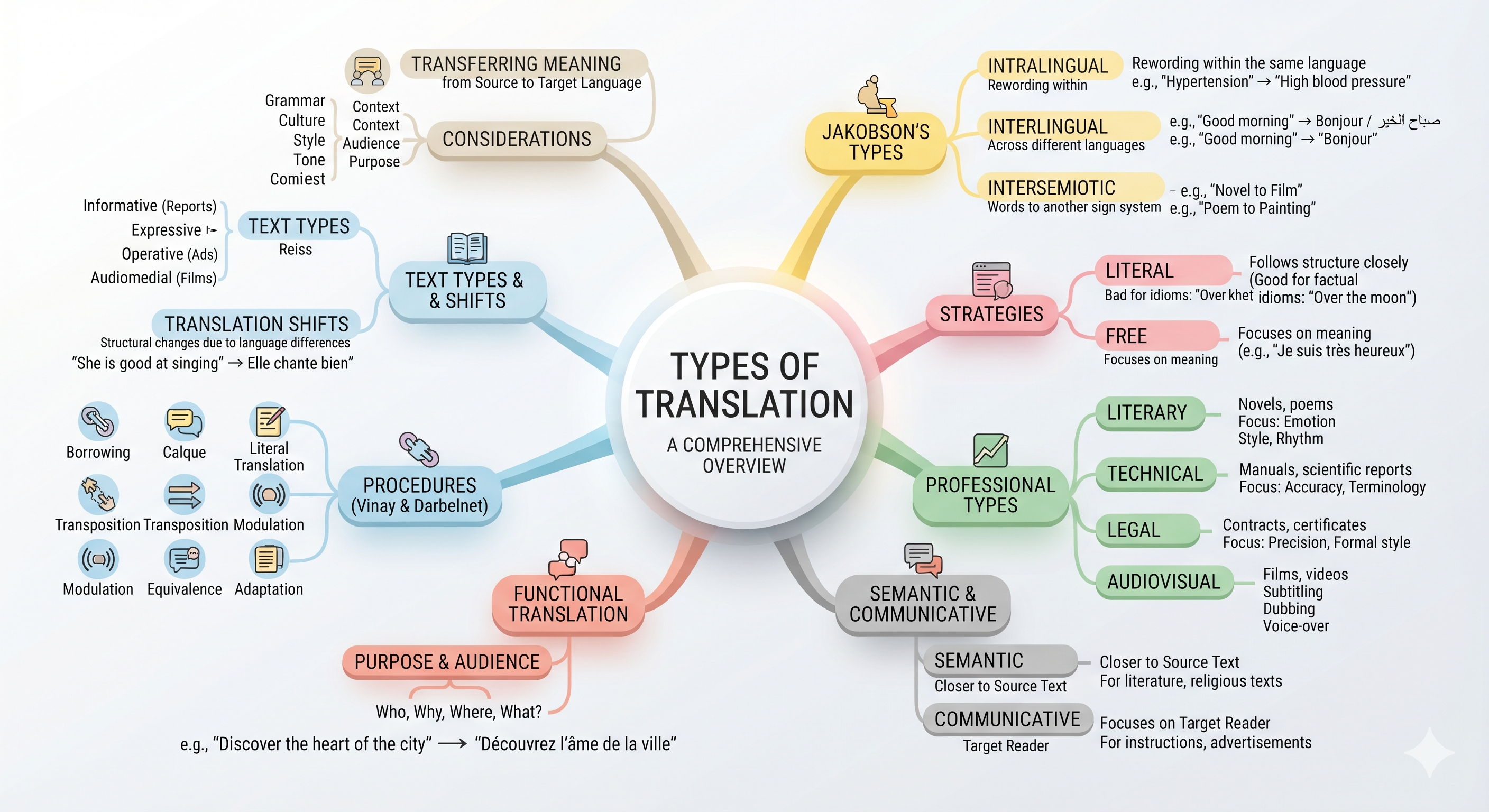
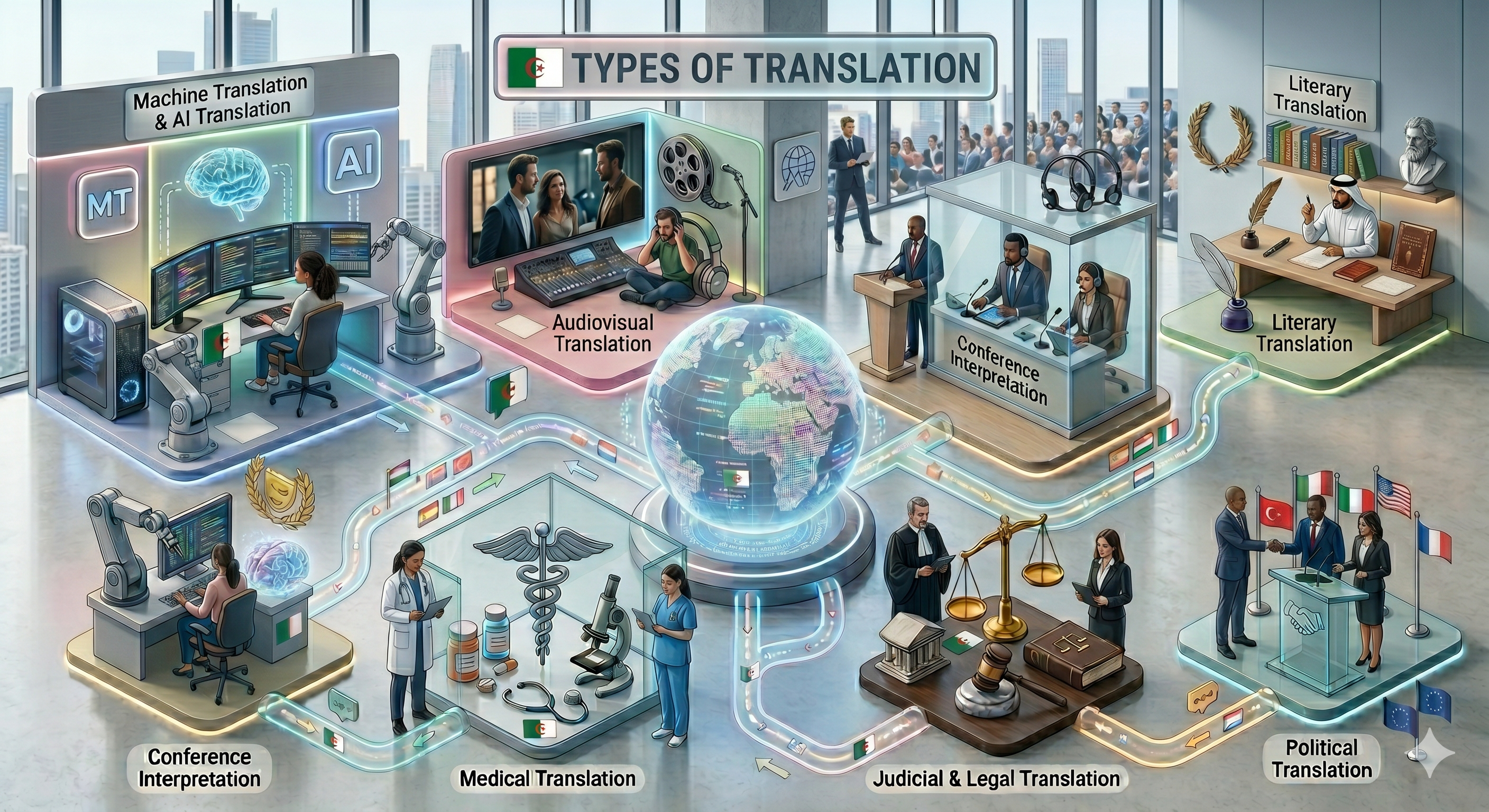
This course introduces the main types of translation and their role in literary, cultural, and communicative contexts. It presents translation not only as a transfer from one language to another, but also as a process of interpretation, rewriting, adaptation, and cultural mediation. The course covers major categories such as intralingual, interlingual, intersemiotic, literal, free, semantic, communicative, literary, technical, legal, audiovisual, and functional translation.
Target Public
This course is intended for Master’s students in Modern and Contemporary Criticism. It is especially relevant for students interested in literature, comparative studies, cultural criticism, discourse analysis, and the relationship between texts, languages, and cultures.
By the end of the course, students will be able to:
- Identify the main types of translation.
- Understand translation as a linguistic, literary, and cultural practice.
- Distinguish between different translation methods and strategies.
- Analyze how meaning, style, culture, and context influence translation.
- Relate translation to modern and contemporary critical approaches.
- Develop a critical awareness of translation as interpretation, rewriting, and cultural transfer.
-
 Brief Description
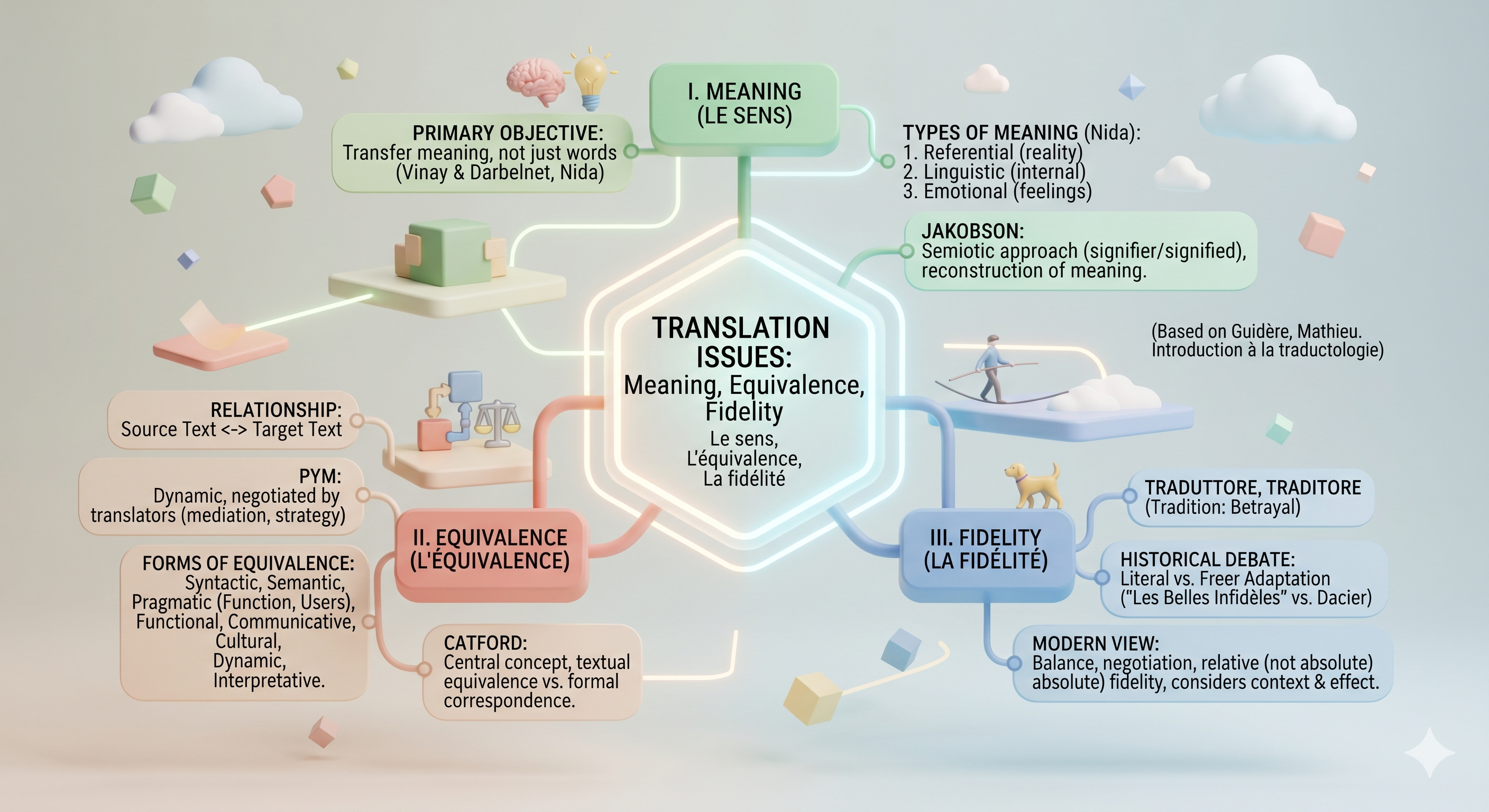
This lesson explores the main issues in translation studies through the concepts of meaning, equivalence, and fidelity. Based on Mathieu Guidère’s Introduction à la traductologie (pp. 79–85), it presents major translation theories and shows how translation involves interpretation, culture, and communication.Target Public
Master’s students in Contemporary and Modern Criticism, especially those interested in literary studies, translation studies, and cultural analysis.General Objectives
The lesson aims to introduce students to the major theories of translation, develop their critical understanding of translation as an interpretative act, and help them analyze the relationship between language, meaning, and culture in translated texts.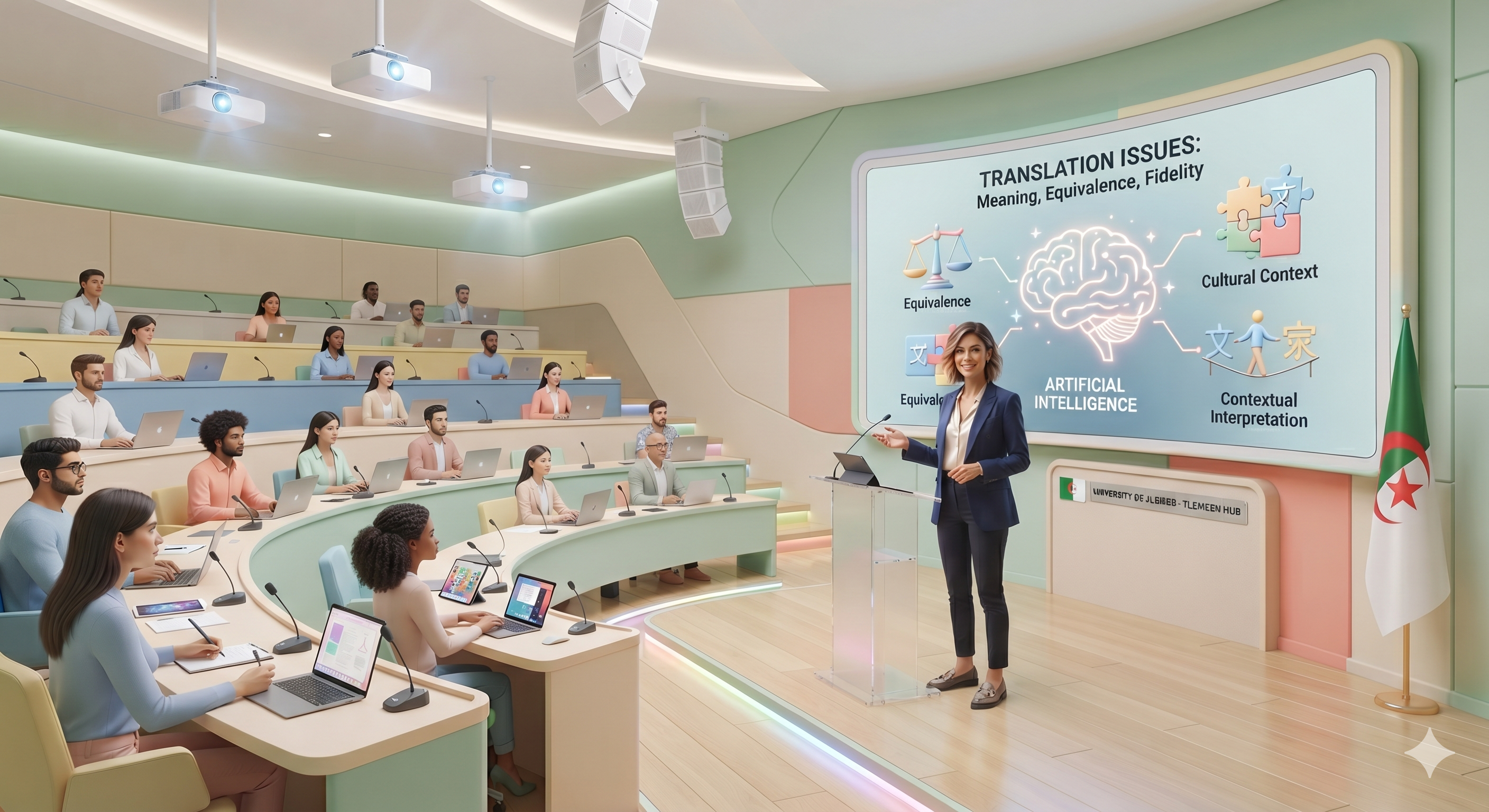
-
 Brief Description
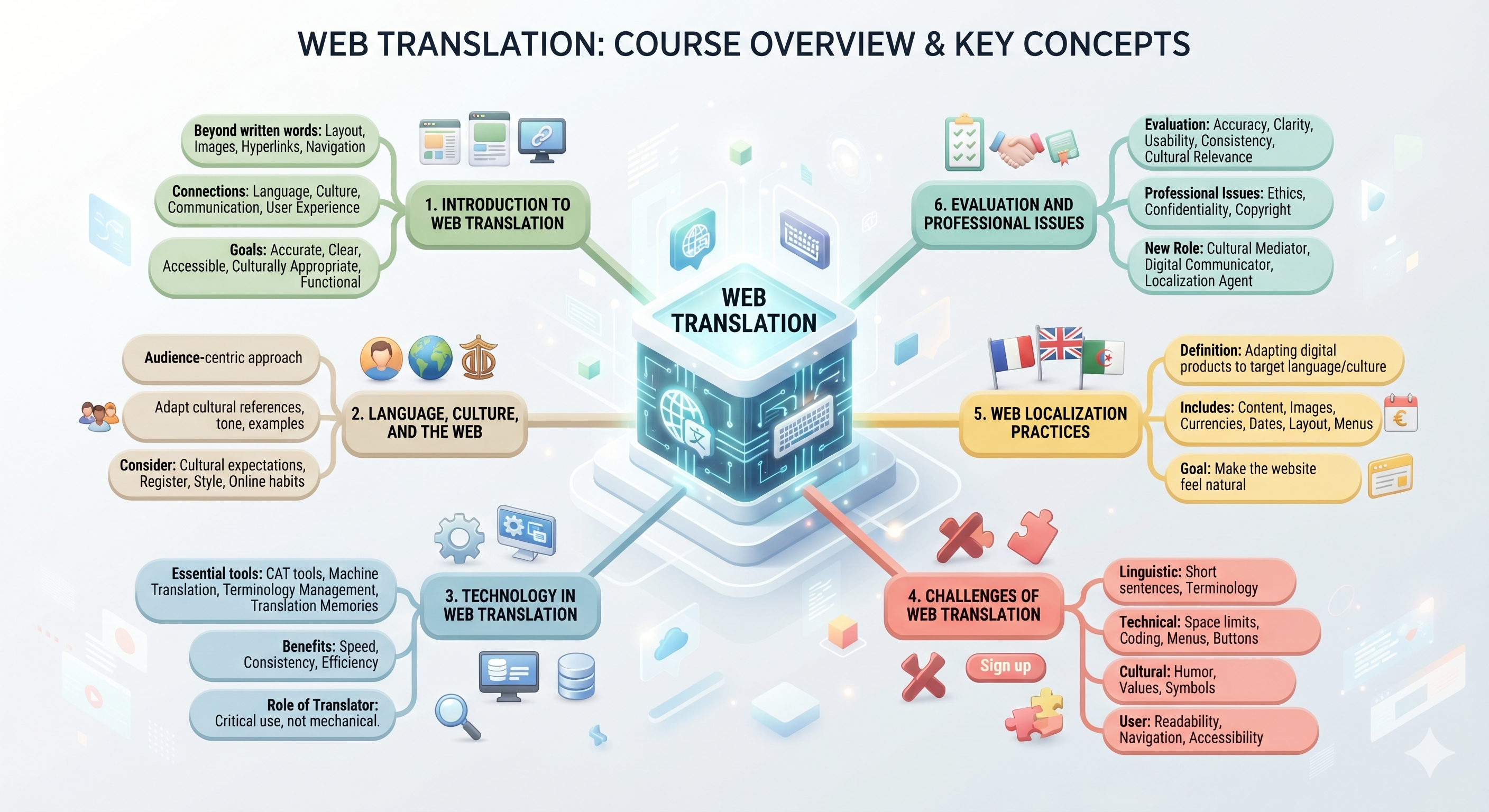
This course introduces students to web translation as a modern field that combines translation, technology, culture, and digital communication. It focuses on translating websites while considering linguistic accuracy, cultural adaptation, user expectations, website constraints, and the role of technology in the translation process.
Target Public
Master 1 students in Modern and Contemporary Criticism.
General Objective
By the end of this course, students will be able to understand the main principles of web translation, analyze the challenges of translating online content, and evaluate how language, culture, technology, and user experience interact in multilingual websites.

-
 Course Description
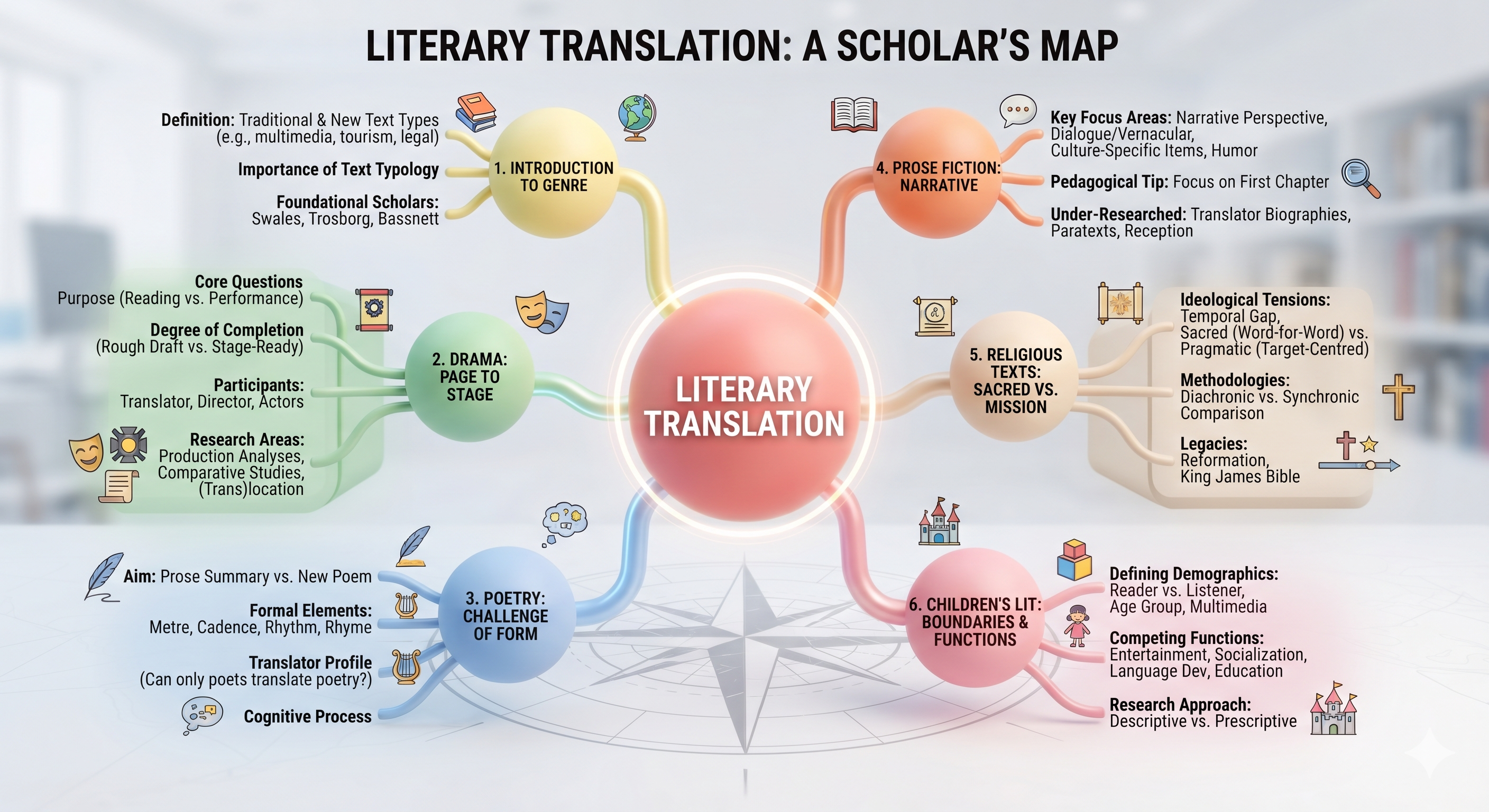
This course explores Genre Translation as a critical site of cultural translocation and textual criticism. It investigates how distinct literary forms—drama, poetry, prose, and sacred texts—impose unique formal and ideological constraints. Students will analyze translations not merely as linguistic transfers, but as complex products of socio-political manipulation and audience reception.
Target Audience
Master 1 students in Modern and Contemporary Criticism.
-
Apply Critical Theory: Deconstruct translated texts by applying contemporary literary, ideological, and polysystem translation frameworks.
-
Formulate Research Methodologies: Isolate distinct genre variables—like performability, cadence, or narrative perspective—to design advanced research projects.
-
Evaluate Sociological Contexts: Critique the invisible forces shaping literature, including translator agency, paratexts, and media reception.
-
Defend Analytical Choices: Develop the academic vocabulary required to objectively critique or defend complex translation strategies.
-
-
Brief Description
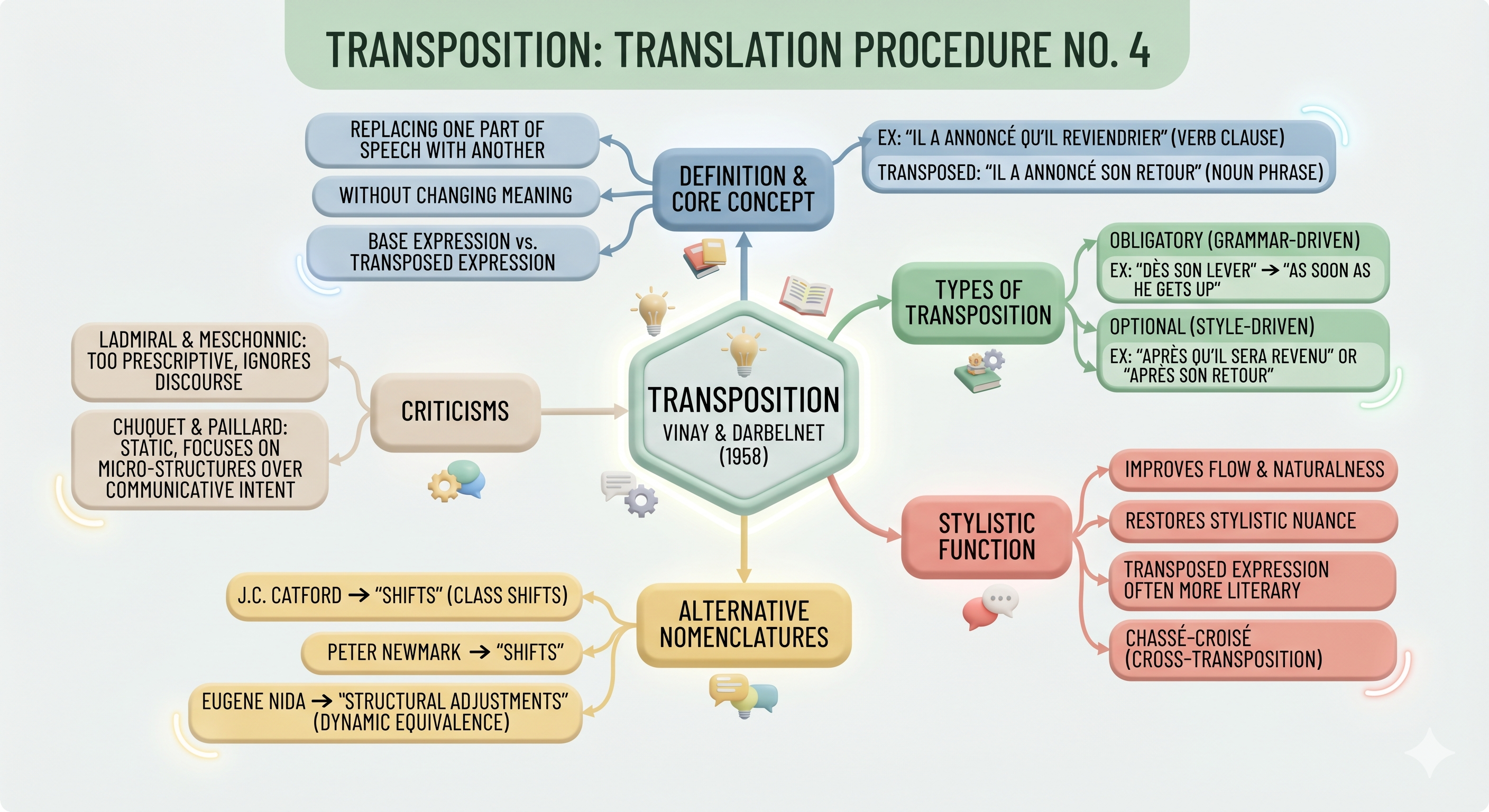
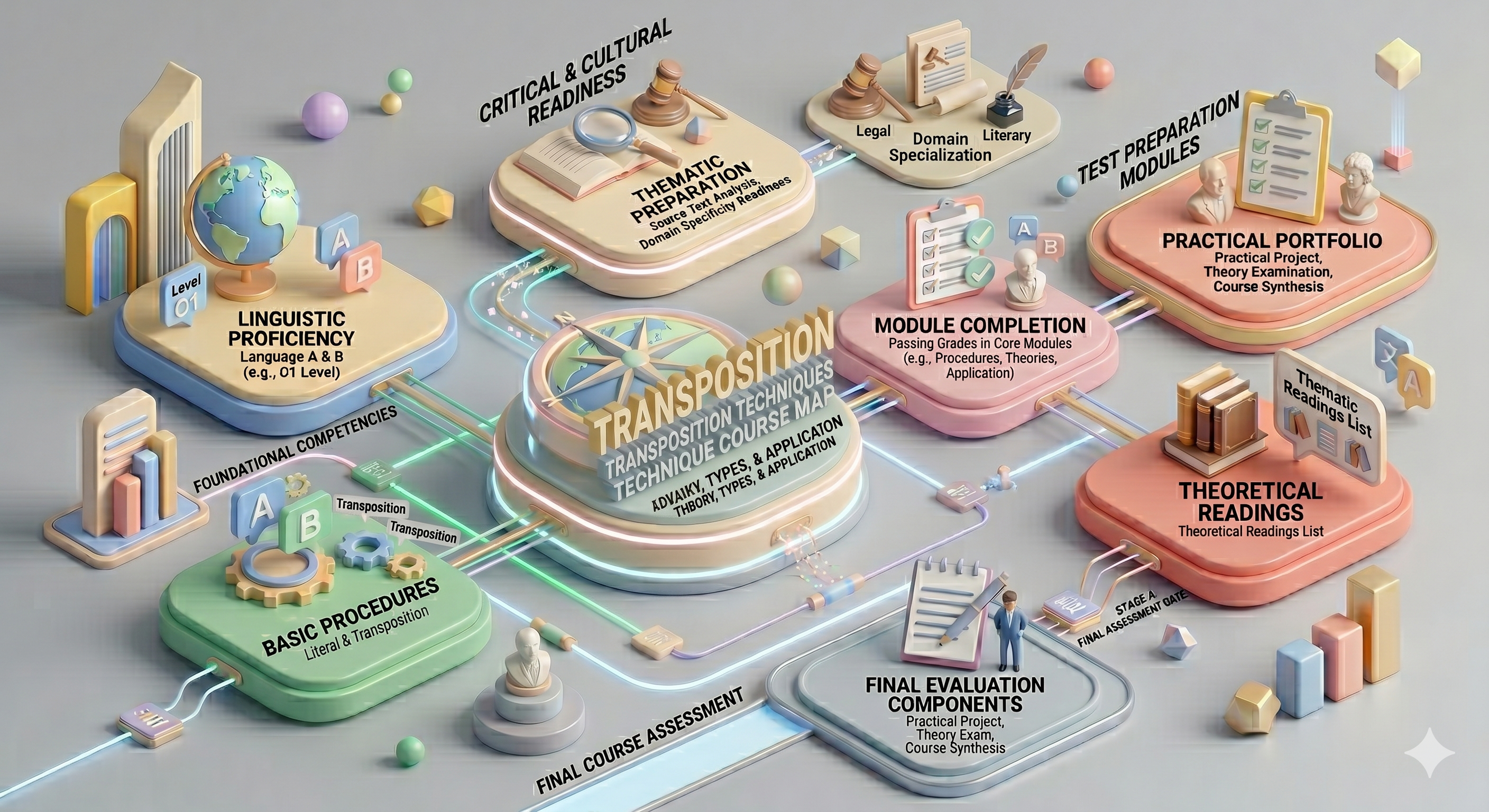
This course explores the mechanics of structural shifts in translation, focusing centrally on Vinay and Darbelnet’s "Transposition" procedure. It bridges comparative linguistic theory with practical application, examining how translators alter grammatical categories across languages to maintain semantic equivalence and natural phrasing. The module also engages with modern theoretical critiques, providing a balanced view of prescriptive versus discourse-based translation strategies.
Target Audience
Master 1 students in Modern and Contemporary Criticism.
-
Identify and Apply: Recognize instances requiring obligatory transposition and effectively apply optional transpositions to enhance stylistic flow.
-
Compare Terminologies: Understand how foundational translation scholars (like Catford, Newmark, and Nida) conceptualize and categorize structural shifts.
-
Critique Methodologies: Critically evaluate the limitations of micro-linguistic translation procedures against broader, discourse-oriented approaches.
-
Enhance Practical Fluency: Develop the intuitive ability to transition seamlessly between differing syntactic structures of source and target languages.

-
-
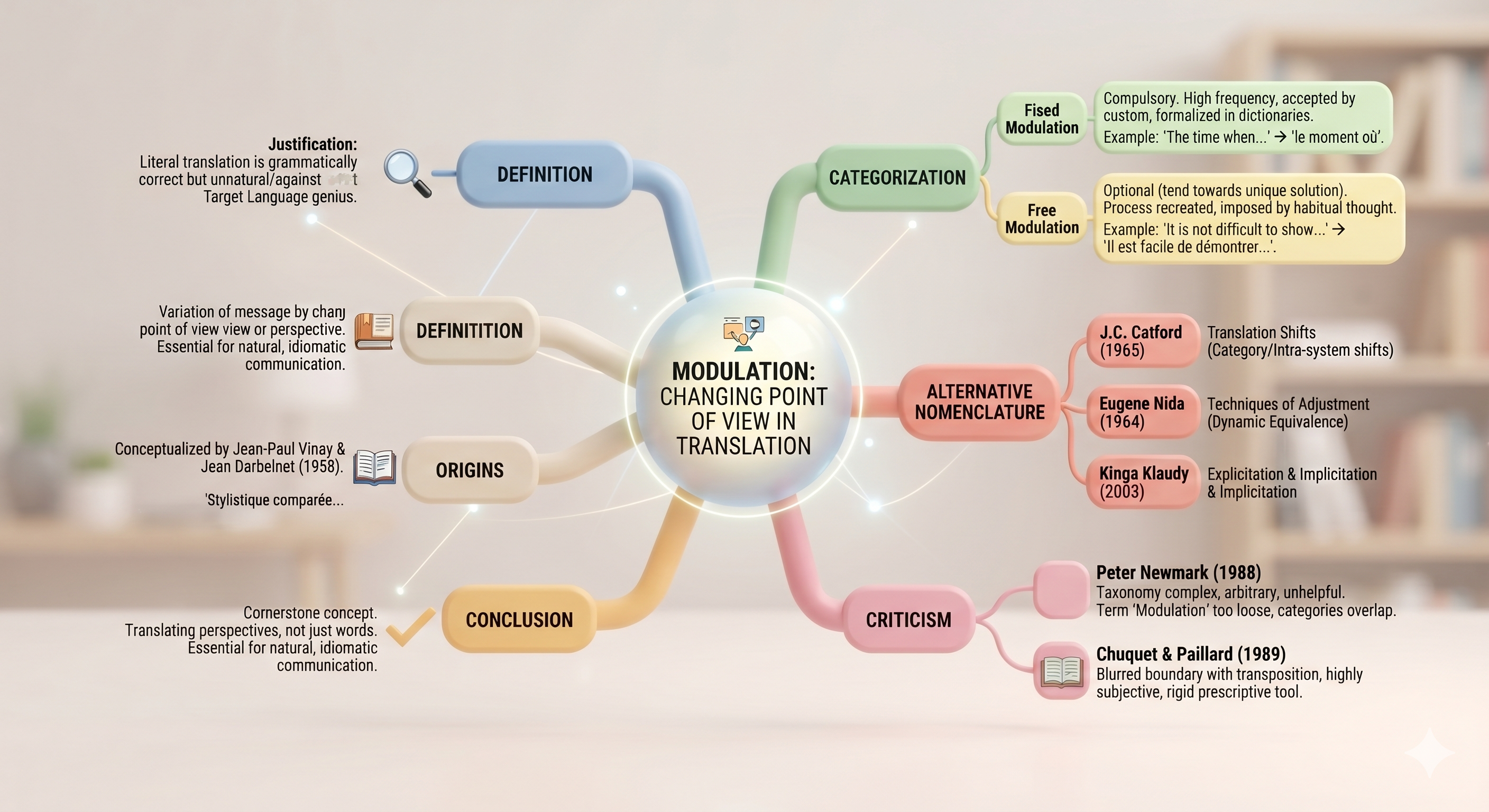
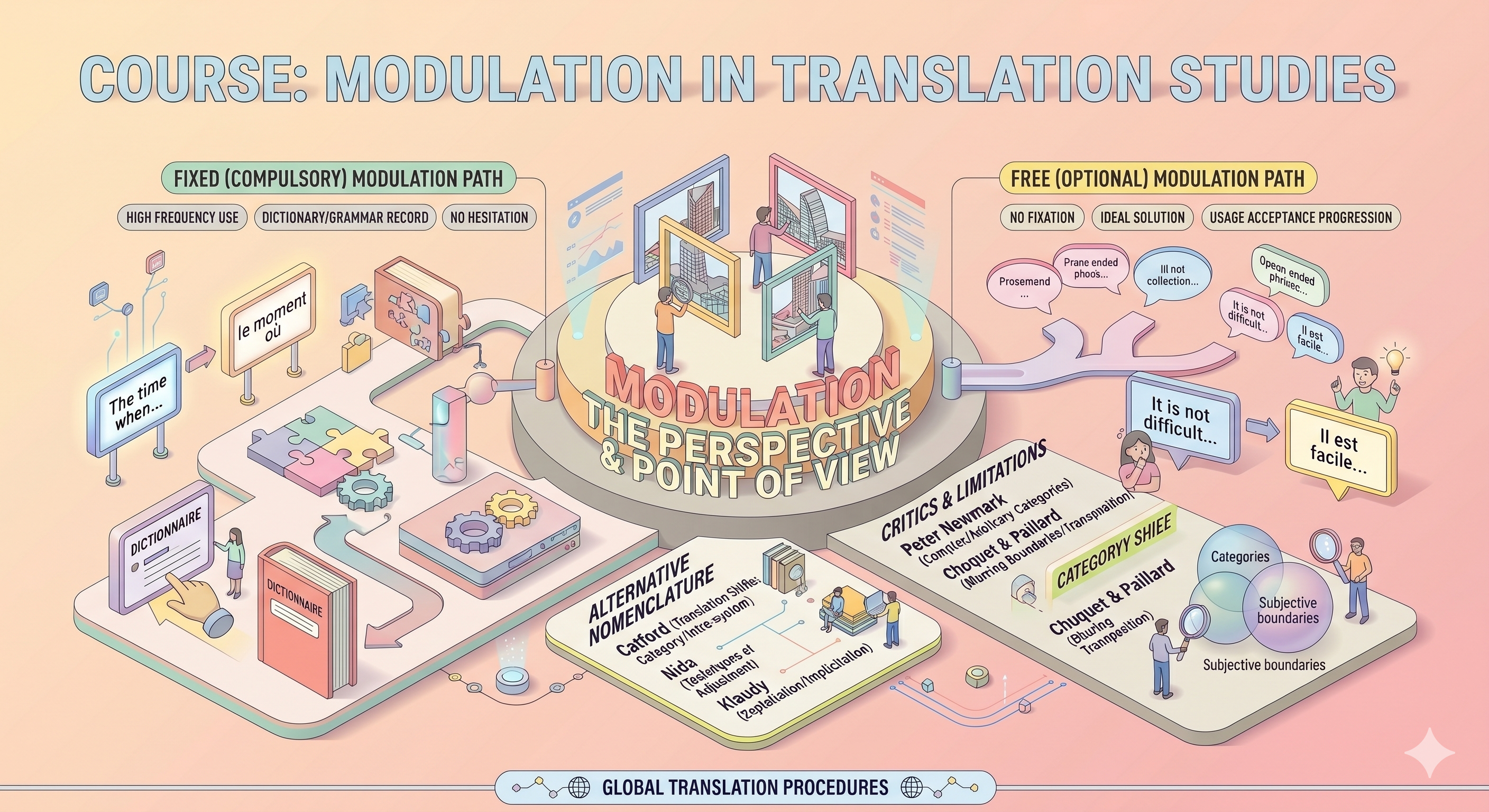 Brief Description This course bridges the gap between literal word-for-word rendering and natural, idiomatic communication. It explores foundational translation theories and practical adjustment techniques—specifically "oblique" procedures like modulation—teaching students how to seamlessly shift cognitive and cultural perspectives to align with the natural spirit of the target language.
Target Audience
Master 1 students in Modern and Contemporary Criticism.
-
Identify situations where literal translation produces unnatural phrasing and recognize the need for oblique translation strategies.
-
Apply perspective-shifting techniques (like modulation) to produce text that is grammatically correct and culturally idiomatic.
-
Analyze texts using various theoretical frameworks (from Vinay and Darbelnet to Nida and Catford).
-
Critique translation choices and evaluate the boundaries, necessity, and effectiveness of different translation shifts.

-
-
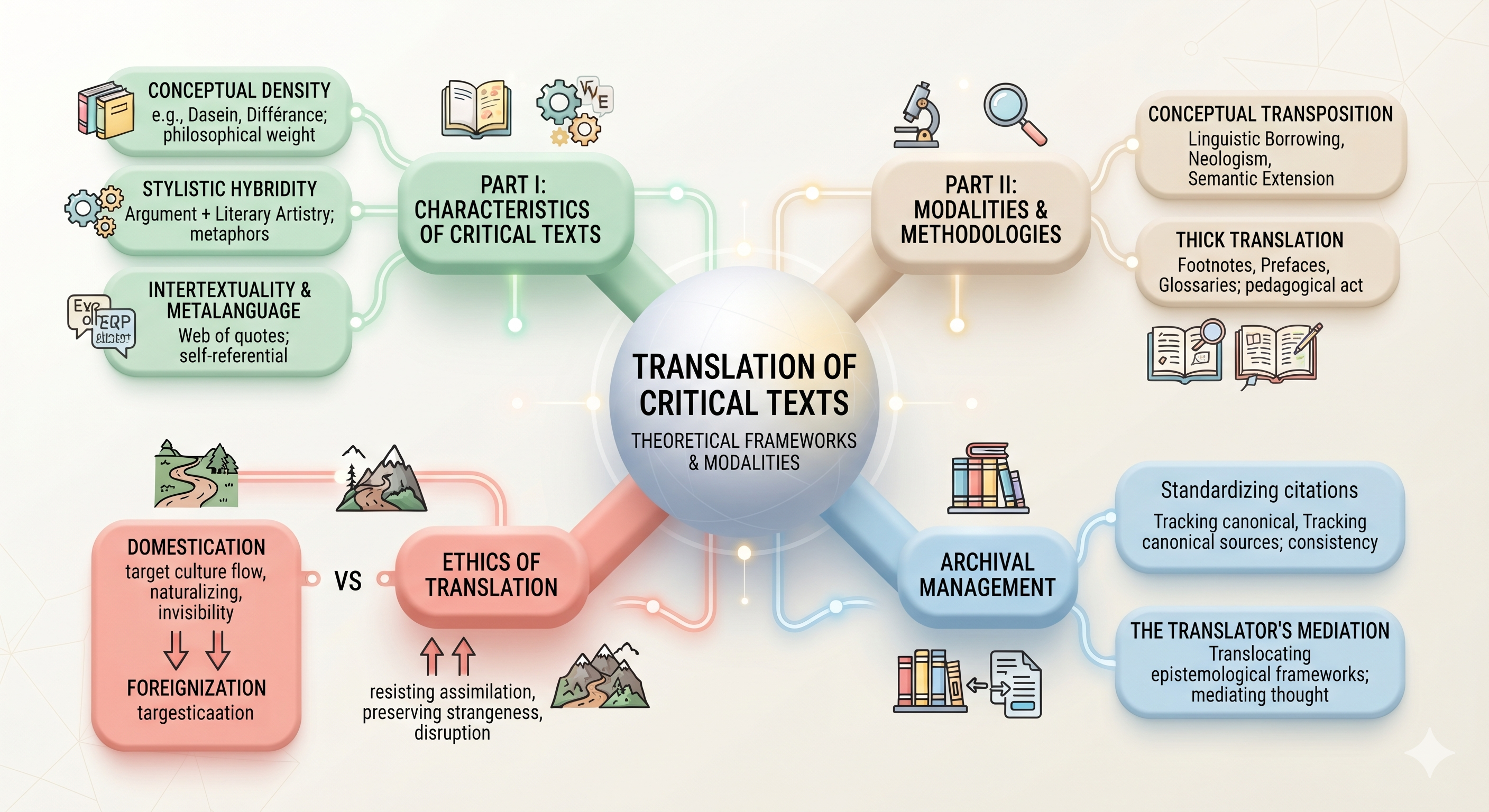 Brief Description This course explores the complex intersection of literary theory, philosophy, and translation studies. It equips learners with the theoretical frameworks and practical methodologies—such as thick translation and conceptual transposition—necessary to accurately transfer conceptually dense and stylistically hybrid academic texts across linguistic and cultural borders.
Target Audience :Master 1 students in Modern and Contemporary Criticism.
-
Identify the unique structural, intertextual, and terminological features of critical texts.
-
Apply specialized translation modalities to negotiate complex, "untranslatable" philosophical concepts.
-
Evaluate the ethical and theoretical impacts of foreignization versus domestication in academic translation.

-
-
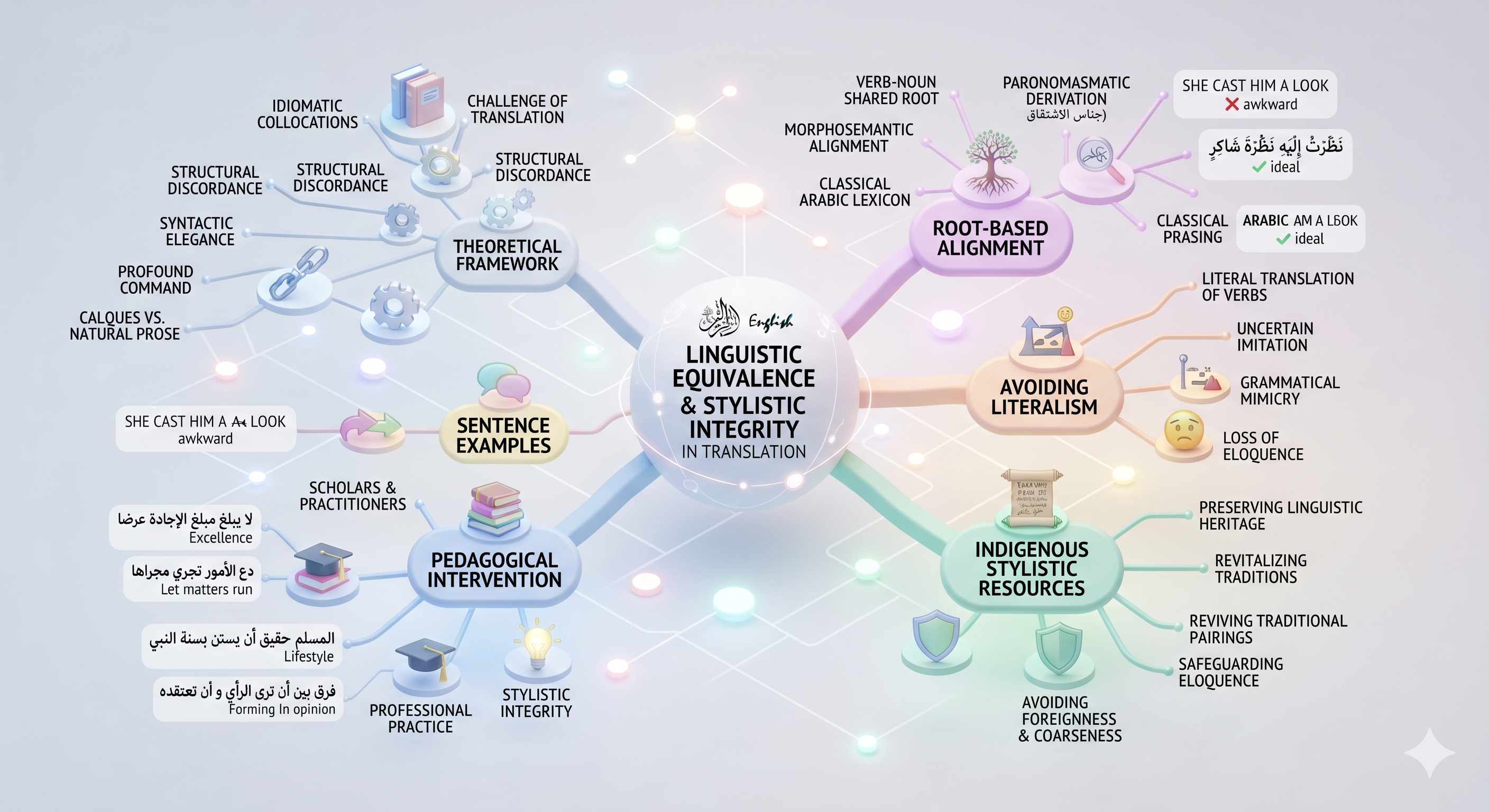 Brief description:This course investigates the translation of English sentences into Arabic by prioritizing syntactic elegance over literalism. Students will apply jinas al-ishtiqaq to replace unnatural structures with traditional morphosemantic alignments. The objective is to foster a scholarly practice that restores the aesthetic depth and stylistic integrity of the Arabic language.
Target Audience: Master 1 students specializing in Modern and Contemporary Criticism.
-
To equip students with the ability to identify and rectify structural awkwardness resulting from English-Arabic linguistic interference.
-
To deepen understanding of classical Arabic stylistic conventions, specifically the morphosemantic alignment between verbs and their associated nouns.
-
To cultivate a critical awareness of translation as a tool for preserving language eloquence and safeguarding against stylistic degradation.
-
-
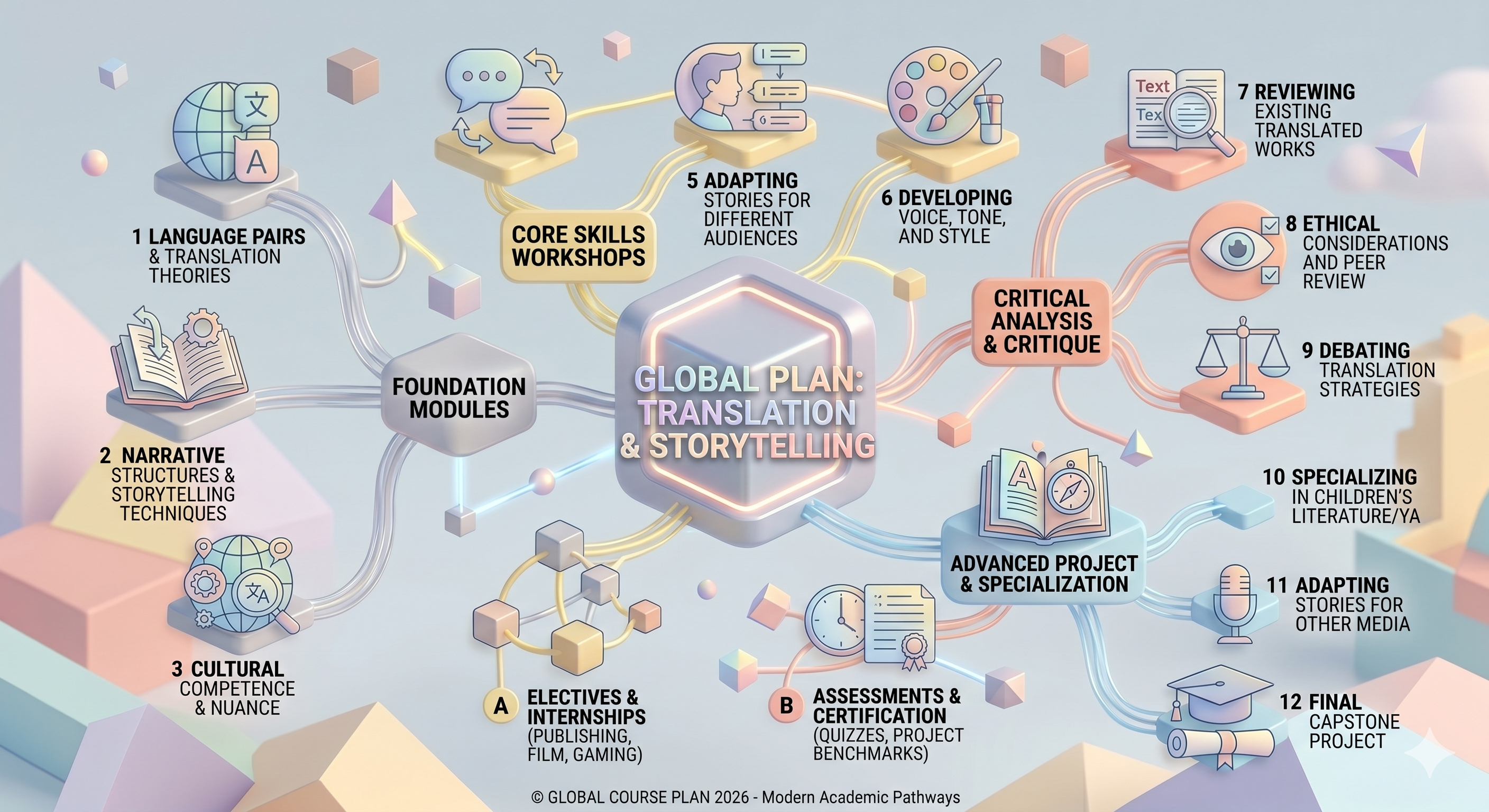 Brief Description This course provides a practical framework for translating narrative prose, using children's stories—such as The Gingerbread Man—as a primary case study. The course moves beyond literal translation to explore stylistic adaptation, the preservation of rhythmic and dramatic elements, and the challenges of maintaining narrative flow across linguistic boundaries. It emphasizes the critical analysis of translation strategies, including "domestication" and "foreignization," to evaluate how cultural and structural nuances are transferred from the source text to the target text.
 Target Audience
Master 1 students specializing in Modern and Contemporary Criticism.
-
Enhancing Critical Analysis: Enable students to deconstruct narrative structures within the source text before reconstruction, ensuring the translation maintains the integrity of the literary genre.
-
Mastering Translation Strategies: Practice selecting precise linguistic alternatives that ensure natural narrative flow, particularly when translating recurring rhythmic elements, such as the Gingerbread Man's refrain.
-
Developing Creative Competence: Cultivate the ability to capture the "spirit" of a story rather than merely translating word-for-word, thereby supporting students' expertise in comparative literary criticism and creative translation.
-
-
 1. Brief Description
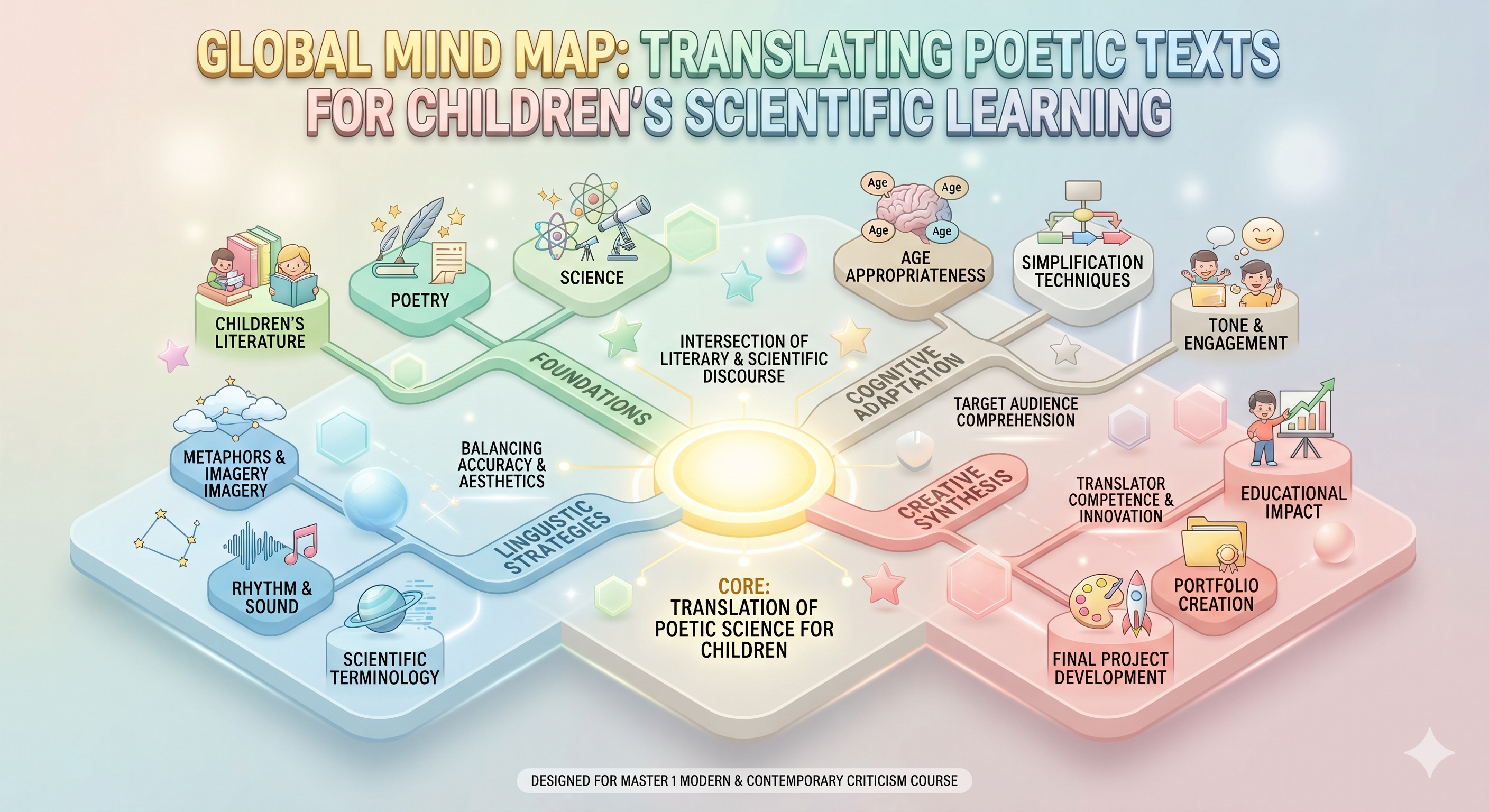
This course provides an analytical and critical examination of translating poetic texts used in children's educational literature, utilizing the text "Bella's Home" as a primary case study. The course explores the translational challenges faced when balancing scientific accuracy—specifically astronomical concepts—with poetic aesthetics, such as rhythm and imagery. It further investigates strategies for simplifying complex concepts without compromising the literary integrity of the source text.
2. Target Audience
Master 1 students, specializing in Modern and Contemporary Criticism.
-
Analyze Creative Simplification: Enable students to examine the strategies used to transform complex scientific knowledge—such as universal concepts—into accessible literary forms suitable for children.
-
Critique Translational Balance: Develop critical skills to evaluate how a translator balances cognitive requirements (scientific precision) with aesthetic demands (poetic structure and rhythm).
-
Examine the Role of Visuals in Translation: Investigate how poetic text interacts with visual media (illustrations) to enhance scientific understanding for young audiences.
-
Develop Translational Competence: Train students to craft creative translations that preserve the "spirit" of scientific poetry while ensuring knowledge is conveyed through an engaging, literary style

-