اللغة الاجنبية 2
Section outline
-
 Brief Description
This unit introduces ENS students to American and British governments through several parts: comparison, reading, vocabulary study, pronunciation, writing, key grammar, class discussion, debating, and unit assessment. Students will develop their language skills while understanding and discussing political systems in English.
Target Audience
This unit is designed for HNS students studying English. It is suitable for learners who need to develop political vocabulary and basic understanding of English-speaking political systems
By the end of this unit, learners will be able to identify, understand, compare, and analyze basic features of American and British governments. They will also be able to use and pronounce key political vocabulary correctly.

-
 Brief Description
This unit introduces ENS students to American and British governments through several parts: comparison, reading, vocabulary study, pronunciation, writing, key grammar, class discussion, debating, and unit assessment. Students will develop their language skills while understanding and discussing political systems in English.
Target Audience
This unit is designed for HNS students studying English. It is suitable for learners who need to develop political vocabulary and basic understanding of English-speaking political systems
By the end of this unit, learners will be able to identify, understand, compare,and analyze basic features of American and British governments. They will also be able to use and pronounce key political vocabulary correctly.

-
 Brief Description
This unit introduces ENS students to American and British governments through several parts: comparison, reading, vocabulary study, pronunciation, writing, key grammar, class discussion, debating, and unit assessment. Students will develop their language skills while understanding and discussing political systems in English.
Target Audience
This unit is designed for HNS students studying English. It is suitable for learners who need to develop political vocabulary and basic understanding of English-speaking political systems
By the end of this unit, learners will be able to identify, understand, compare, and analyze basic features of American and British governments. They will also be able to use and pronounce key political vocabulary correctly.

-
 1.Brief Description
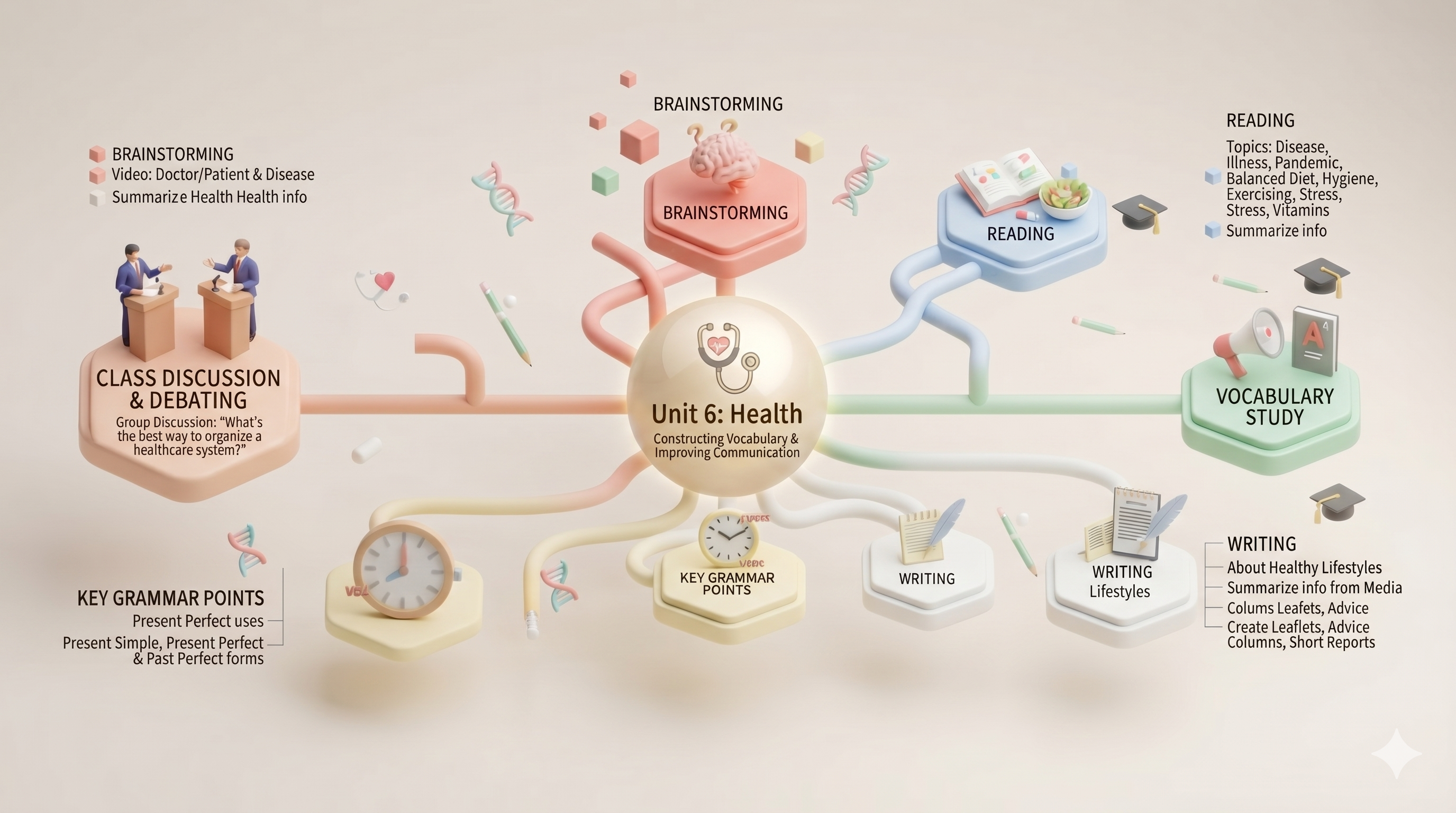
This unit explores health themes to build essential vocabulary and refine communication skills. It uses an integrated approach involving video analysis, reading comprehension, and pronunciation practice to address health-related topics. The curriculum culminates in practical writing tasks and collaborative debates to ensure students can synthesize and apply their learning effectively.
2. Target Audience
First-year bachelor’s degree students in primary education at the Higher Normal School (ENS).
Students will expand health-related vocabulary and improve their fluency in discussing topics such as diseases, nutrition, and hygiene. The course develops professional writing skills for health materials while mastering the present simple, present perfect, and past perfect tenses. It cultivates critical thinking by enabling students toanalyze media information and debate complex issues regarding healthcare systems.
-
1. Brief Description
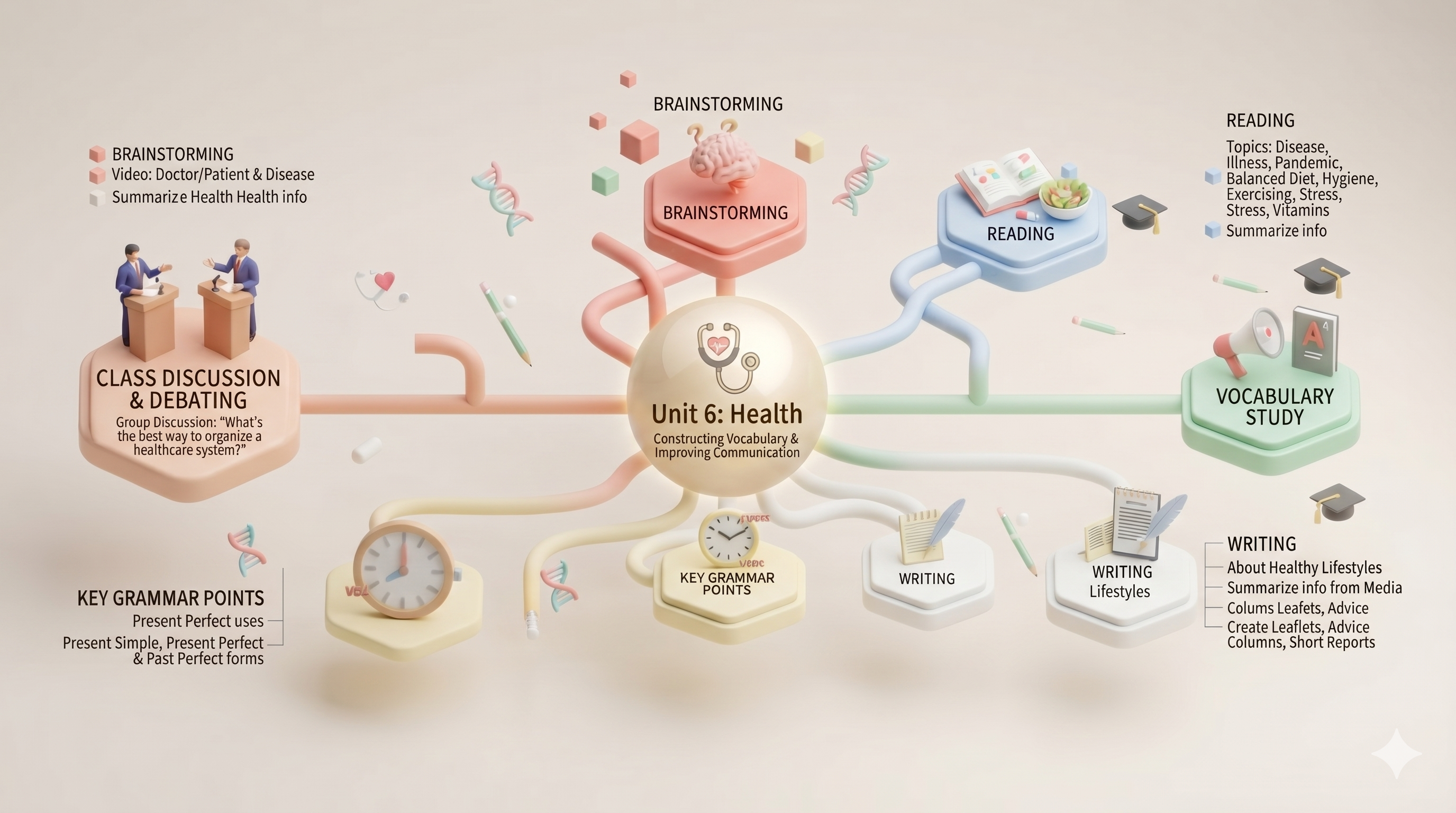
This unit explores health themes to build essential vocabulary and refine communication skills. It uses an integrated approach involving video analysis, reading comprehension, and pronunciation practice to address health-related topics. The curriculum culminates in practical writing tasks and collaborative debates to ensure students can synthesize and apply their learning effectively.
2. Target Audience
First-year bachelor’s degree students in primary education at the Higher Normal School (ENS).
Students will expand health-related vocabulary and improve their fluency in discussing topics such as diseases, nutrition, and hygiene. The course develops professional writing skills for health materials while mastering the present simple, present perfect, and past perfect tenses. It cultivates critical thinking by enabling students to analyze media information and debate complex issues regarding healthcare systems.
-
1. Brief Description
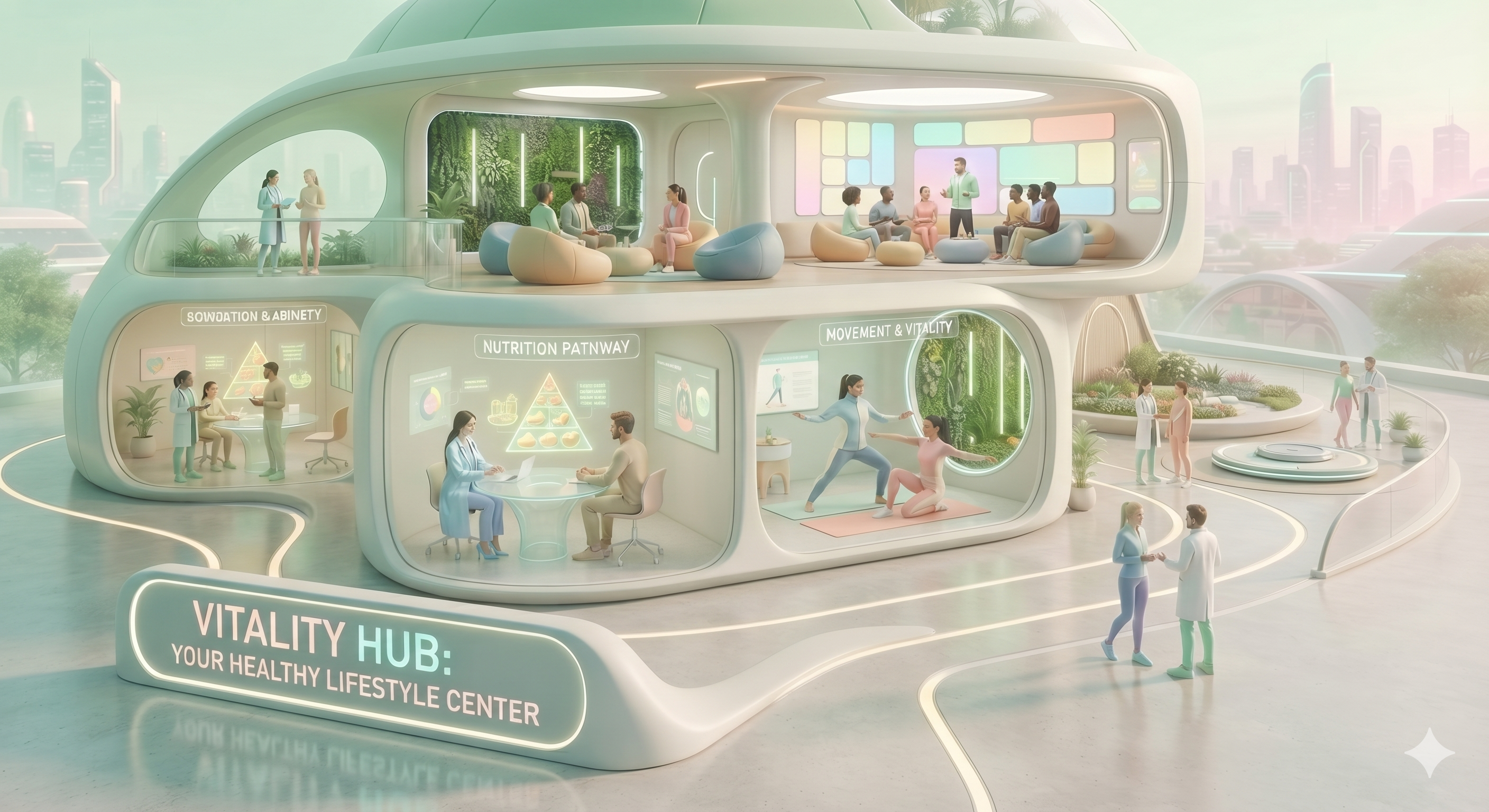
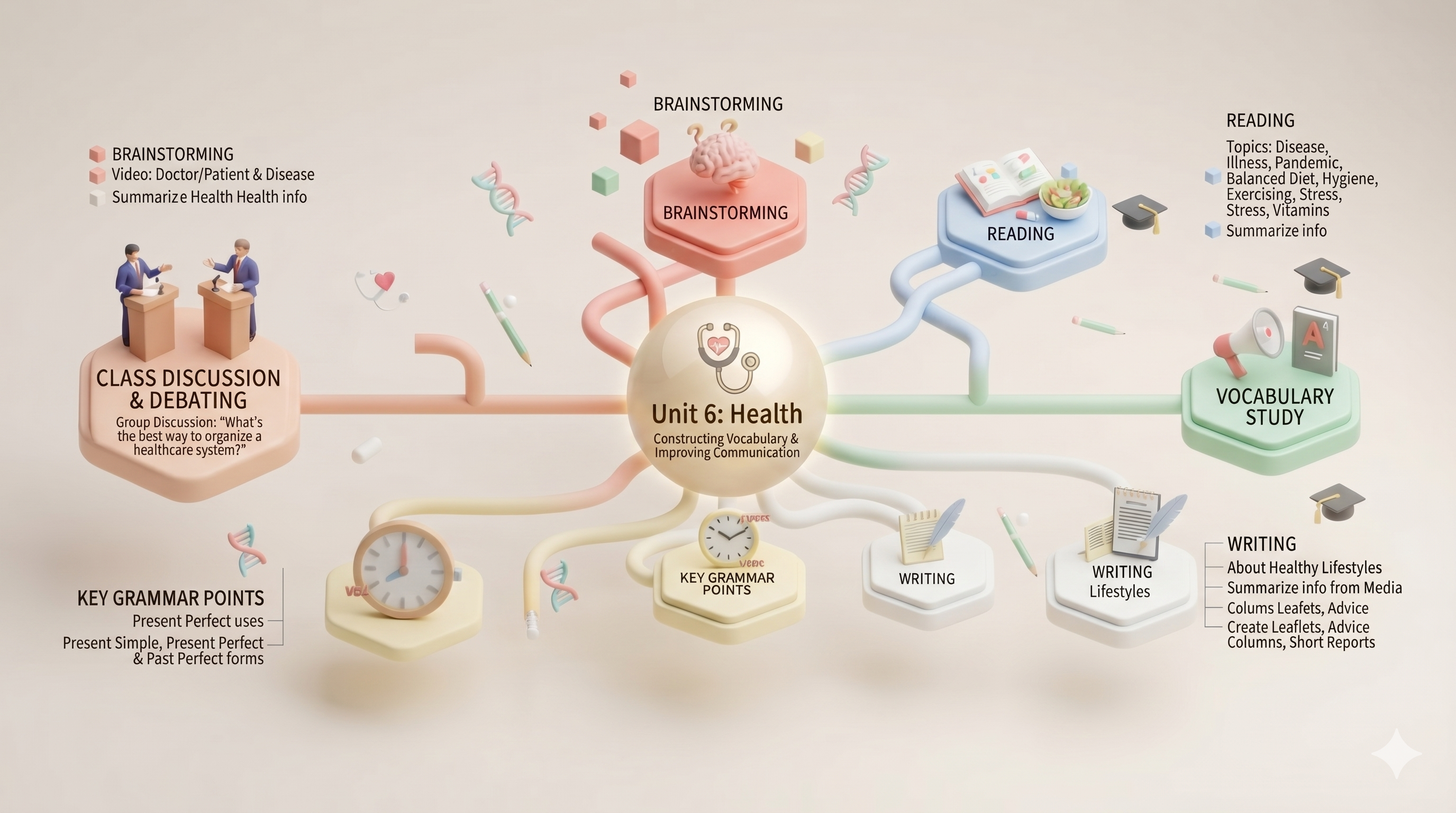
This unit explores health themes to build essential vocabulary and refine communication skills. It uses an integrated approach involving video analysis, reading comprehension, and pronunciation practice to address health-related topics. The curriculum culminates in practical writing tasks and collaborative debates to ensure students can synthesize and apply their learning effectively.
2. Target Audience
First-year bachelor’s degree students in primary education at the Higher Normal School (ENS).
Students will expand health-related vocabulary and improve their fluency in discussing topics such as diseases, nutrition, and hygiene. The course develops professional writing skills for health materials while mastering the present simple, present perfect, and past perfect tenses. It cultivates critical thinking by enabling students to analyze media information and debate complex issues regarding healthcare systems.
-
1. Brief Description
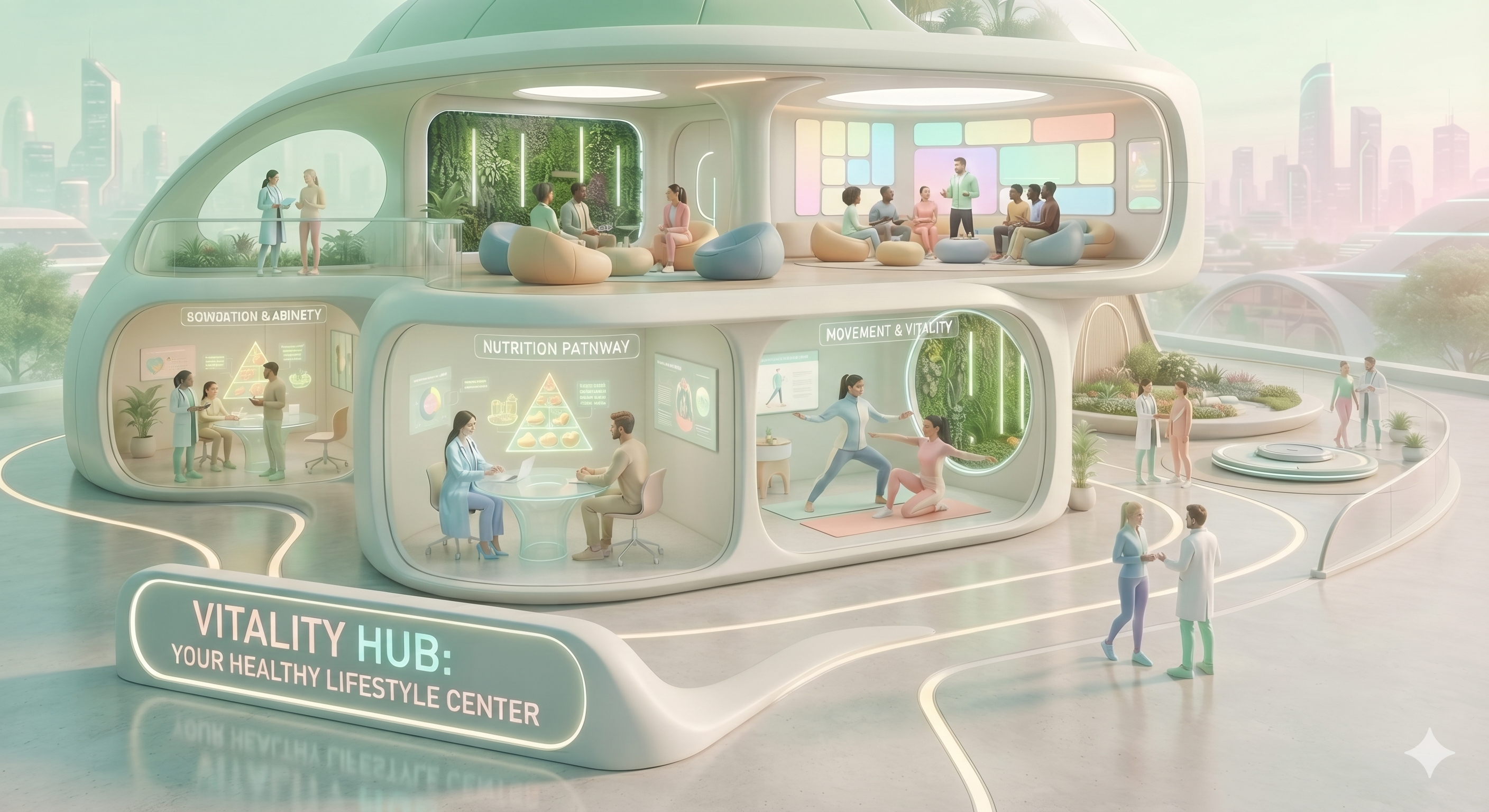
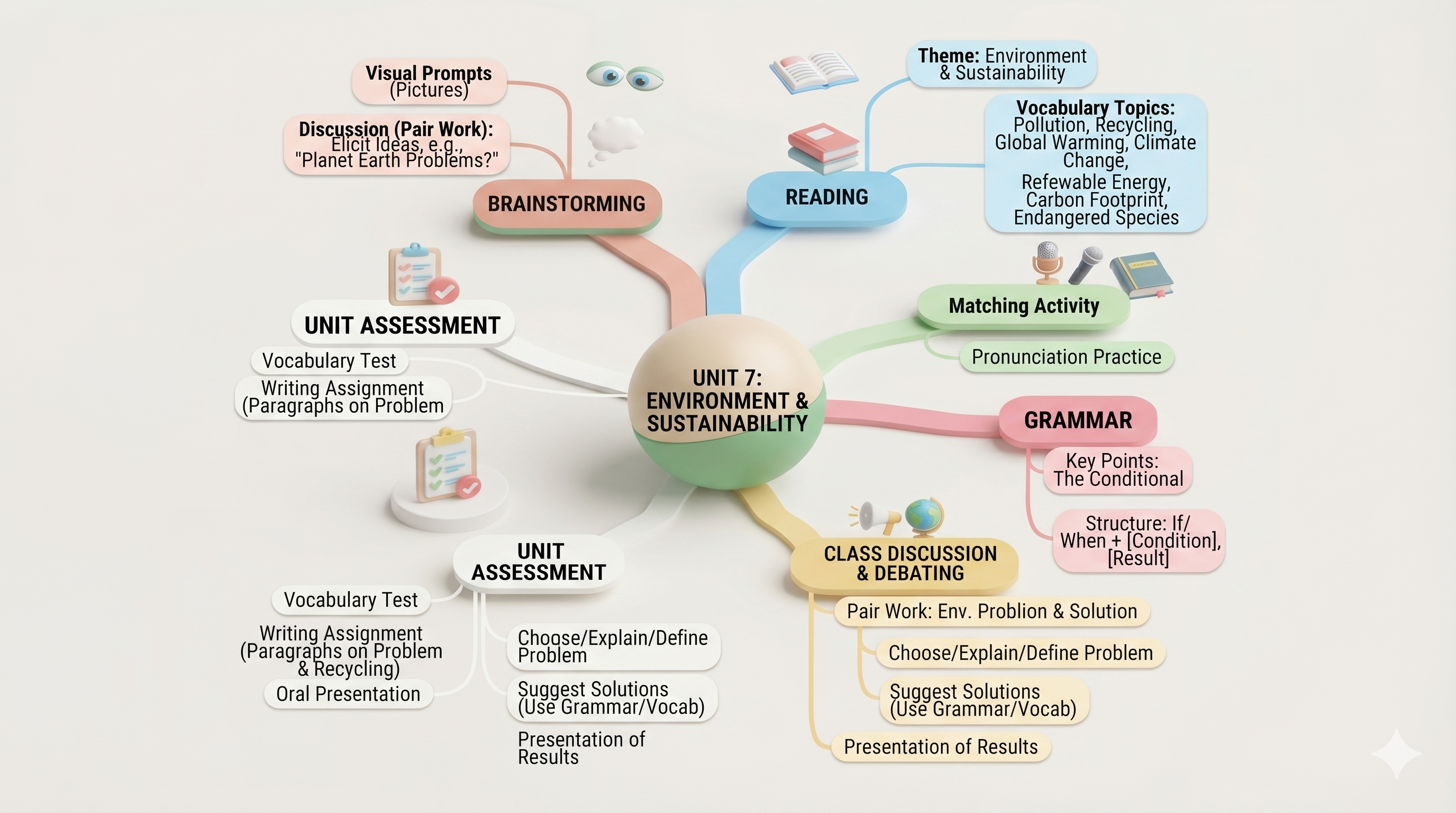
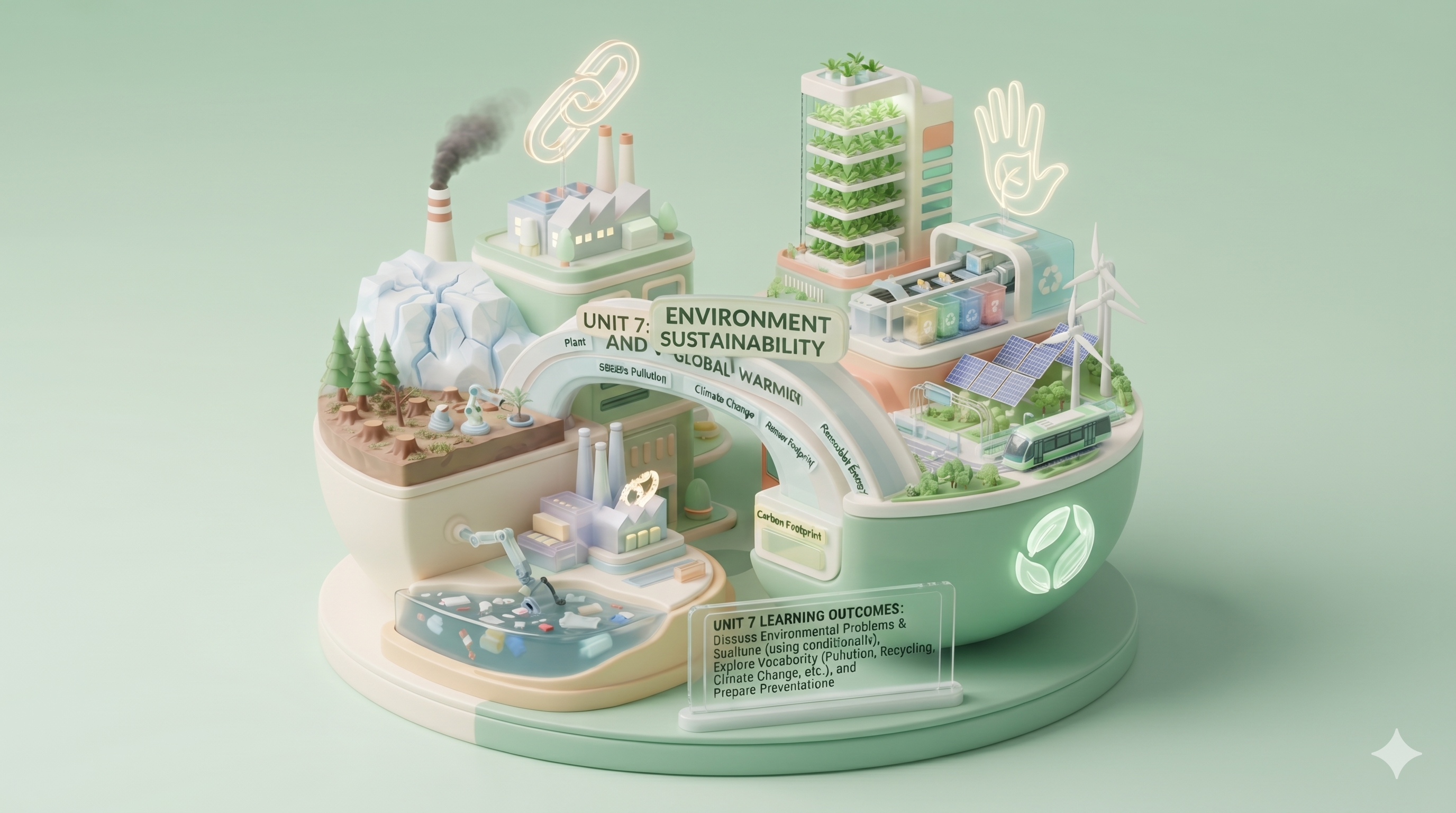
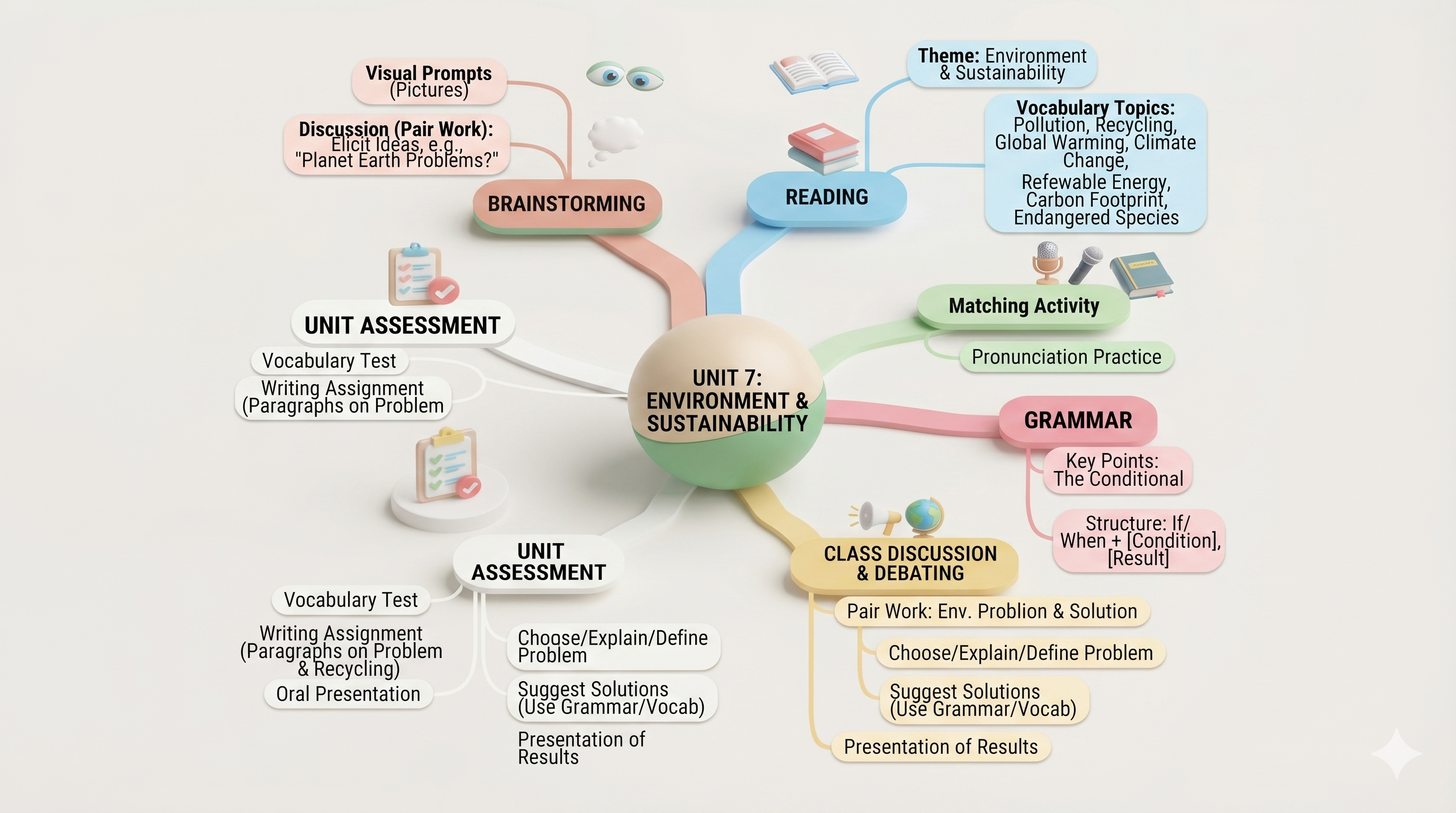
Unit 7, "Environment and Sustainability," is designed to introduce students to critical environmental problems and their corresponding solutions. The course emphasizes developing the capacity to discuss sustainability within both personal and global contexts through a variety of skills, including reading, vocabulary acquisition, grammar application (specifically the conditional), and interactive activities like debating and presentations.
2. Target Audience
The target audience for this course is first-year bachelor’s degree students in Primary Education at the Higher Normal School (ENS).
The general objectives of the unit are to:
-
Introduce students to key environmental issues and foster an understanding of sustainability.
-
Expand student vocabulary using thematic topics such as pollution, recycling, climate change, and renewable energy.
-
Improve English proficiency by teaching the conditional grammar point and focusing on the pronunciation of environmental terminology.
-
Enhance communication and critical thinking skills by requiring students to define environmental problems, propose solutions, and share their findings through oral presentations and writing assignments.
-
-
1. Brief Description of the Course
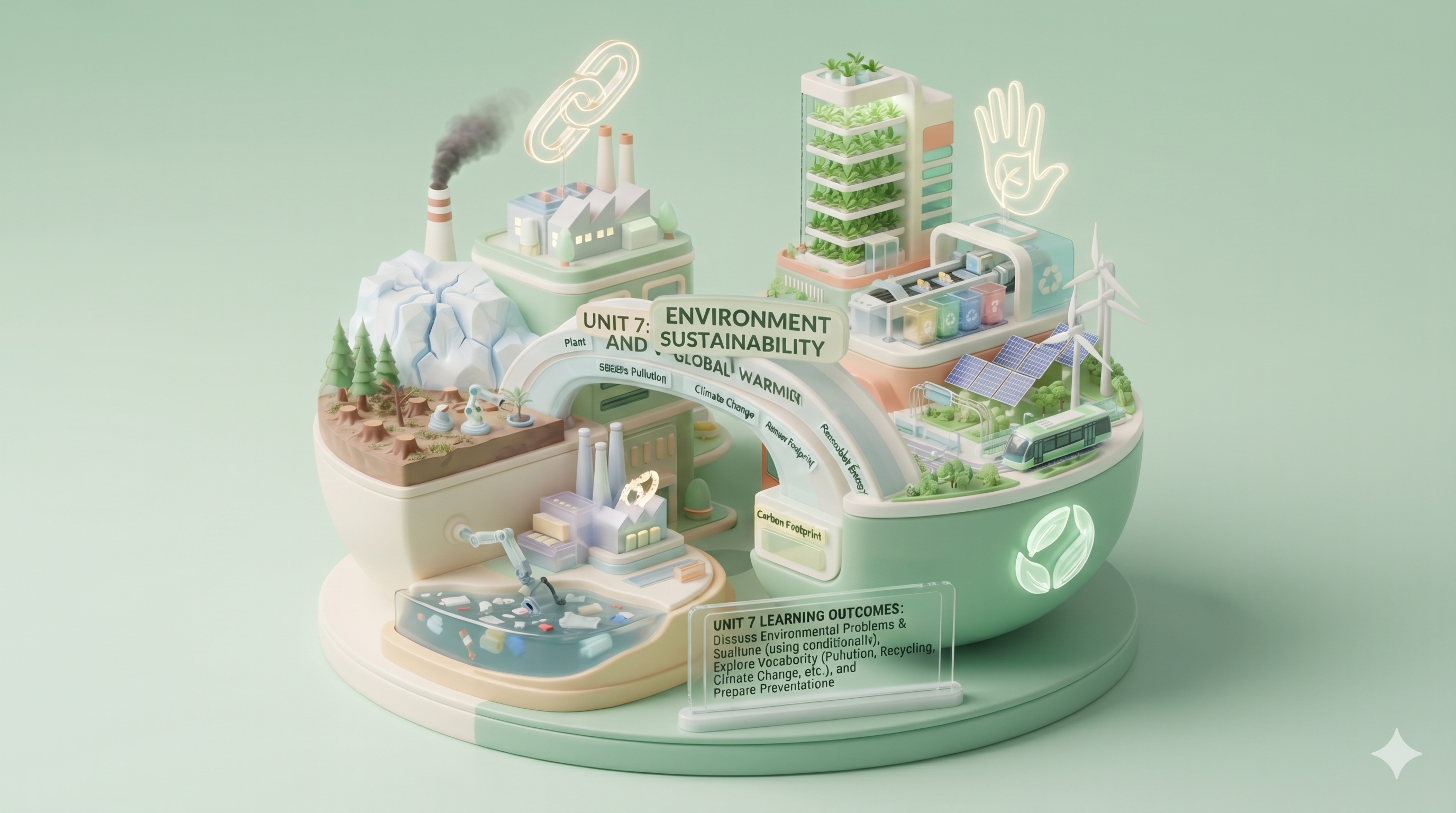
Unit 7, "Environment and Sustainability," is designed to introduce students to critical environmental problems and their corresponding solutions. The course emphasizes developing the capacity to discuss sustainability within both personal and global contexts through a variety of skills, including reading, vocabulary acquisition, grammar application (specifically the conditional), and interactive activities like debating and presentations.
2. Target Audience
The target audience for this course is first-year bachelor’s degree students in Primary Education at the Higher Normal School (ENS).
The general objectives of the unit are to:
-
Introduce students to key environmental issues and foster an understanding of sustainability.
-
Expand student vocabulary using thematic topics such as pollution, recycling, climate change, and renewable energy.
-
Improve English proficiency by teaching the conditional grammar point and focusing on the pronunciation of environmental terminology.
-
Enhance communication and critical thinking skills by requiring students to define environmental problems, propose solutions, and share their findings through oral presentations and writing assignments.
-
-
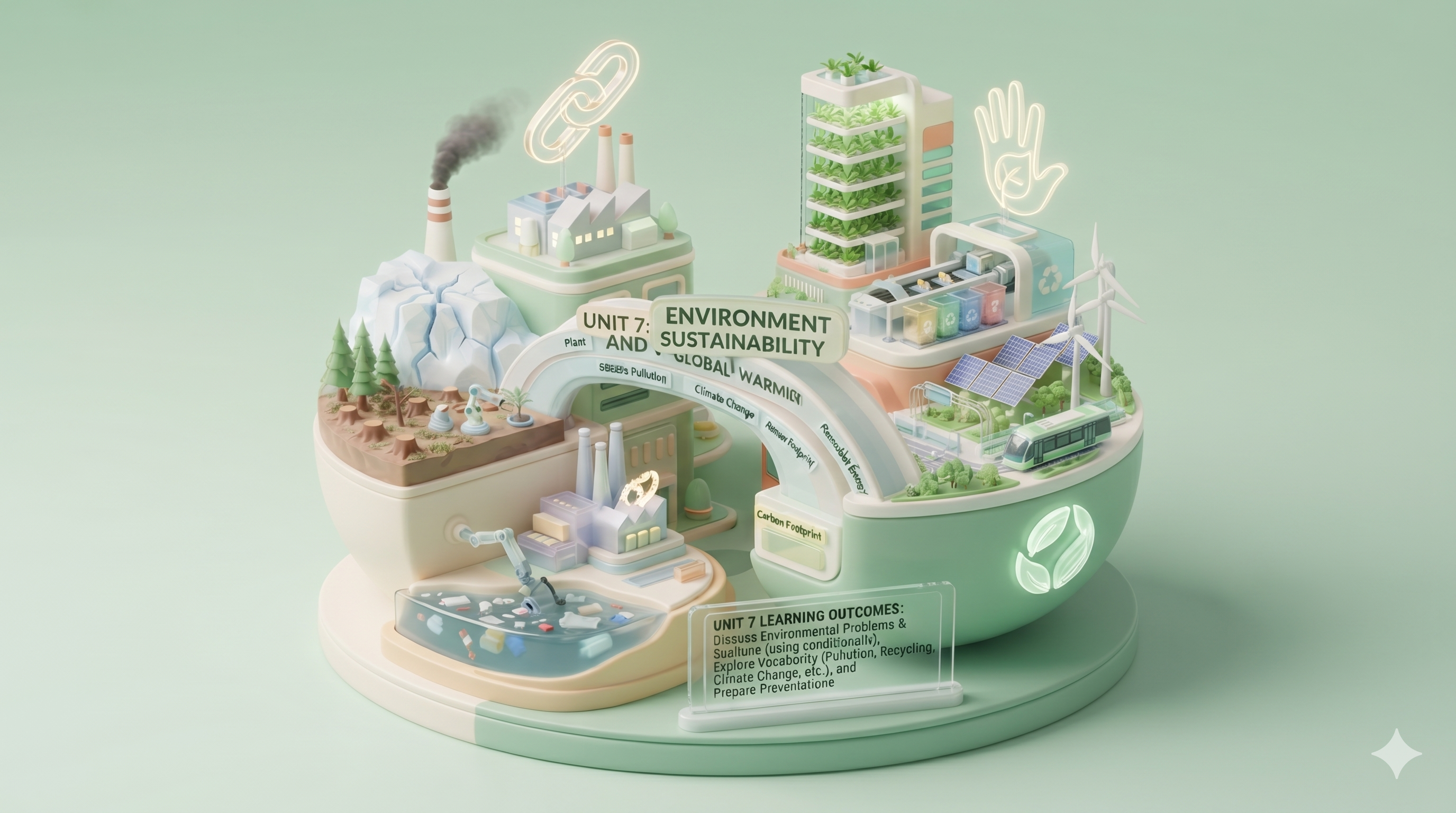
1. Brief Description
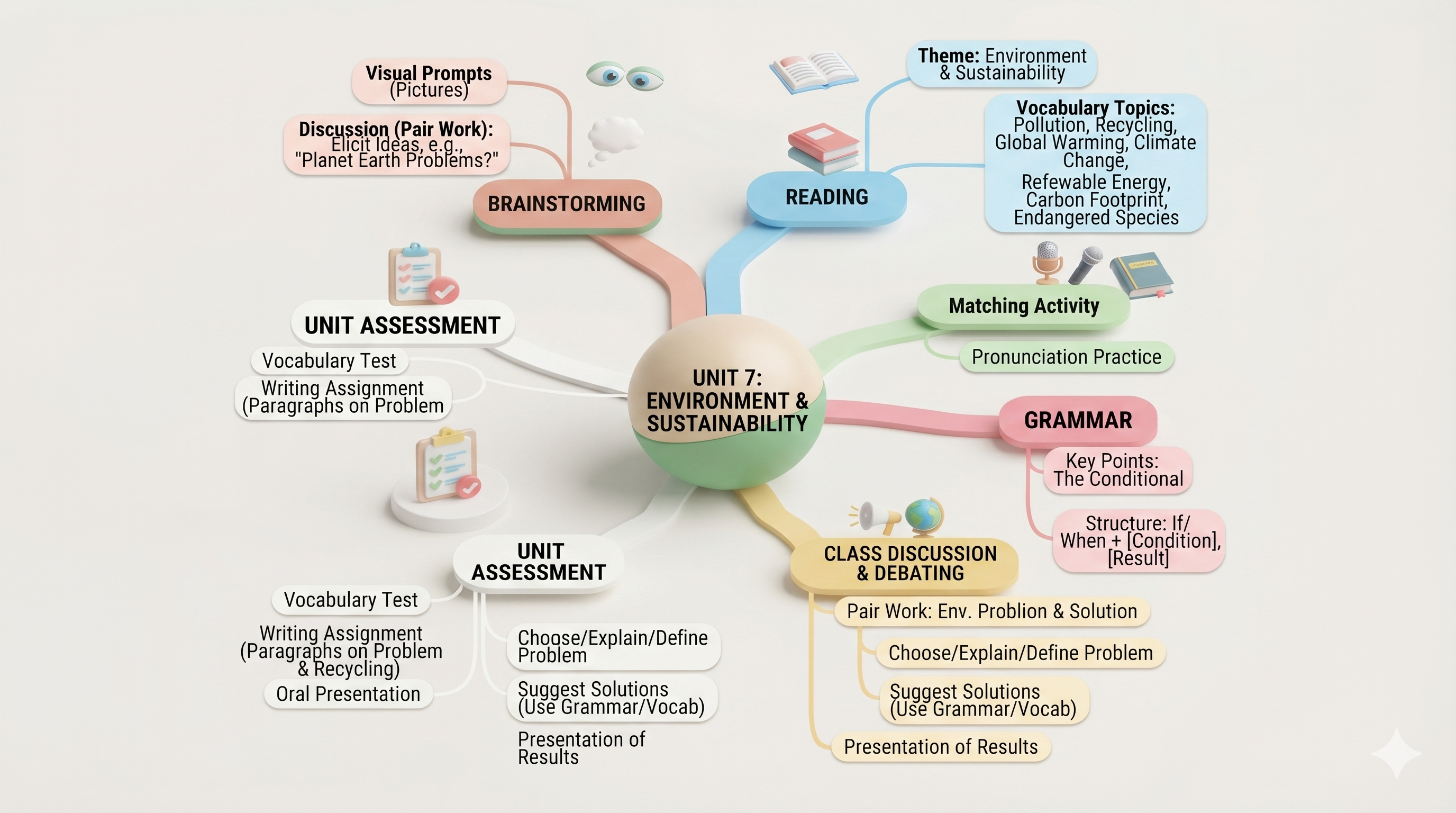
Unit 7, "Environment and Sustainability," is designed to introduce students to critical environmental problems and their corresponding solutions. The course emphasizes developing the capacity to discuss sustainability within both personal and global contexts through a variety of skills, including reading, vocabulary acquisition, grammar application (specifically the conditional), and interactive activities like debating and presentations.
2. Target Audience
The target audience for this course is first-year bachelor’s degree students in Primary Education at the Higher Normal School (ENS).
The general objectives of the unit are to:
-
Introduce students to key environmental issues and foster an understanding of sustainability.
-
Expand student vocabulary using thematic topics such as pollution, recycling, climate change, and renewable energy.
-
Improve English proficiency by teaching the conditional grammar point and focusing on the pronunciation of environmental terminology.
-
Enhance communication and critical thinking skills by requiring students to define environmental problems, propose solutions, and share their findings through oral presentations and writing assignments.
-
-
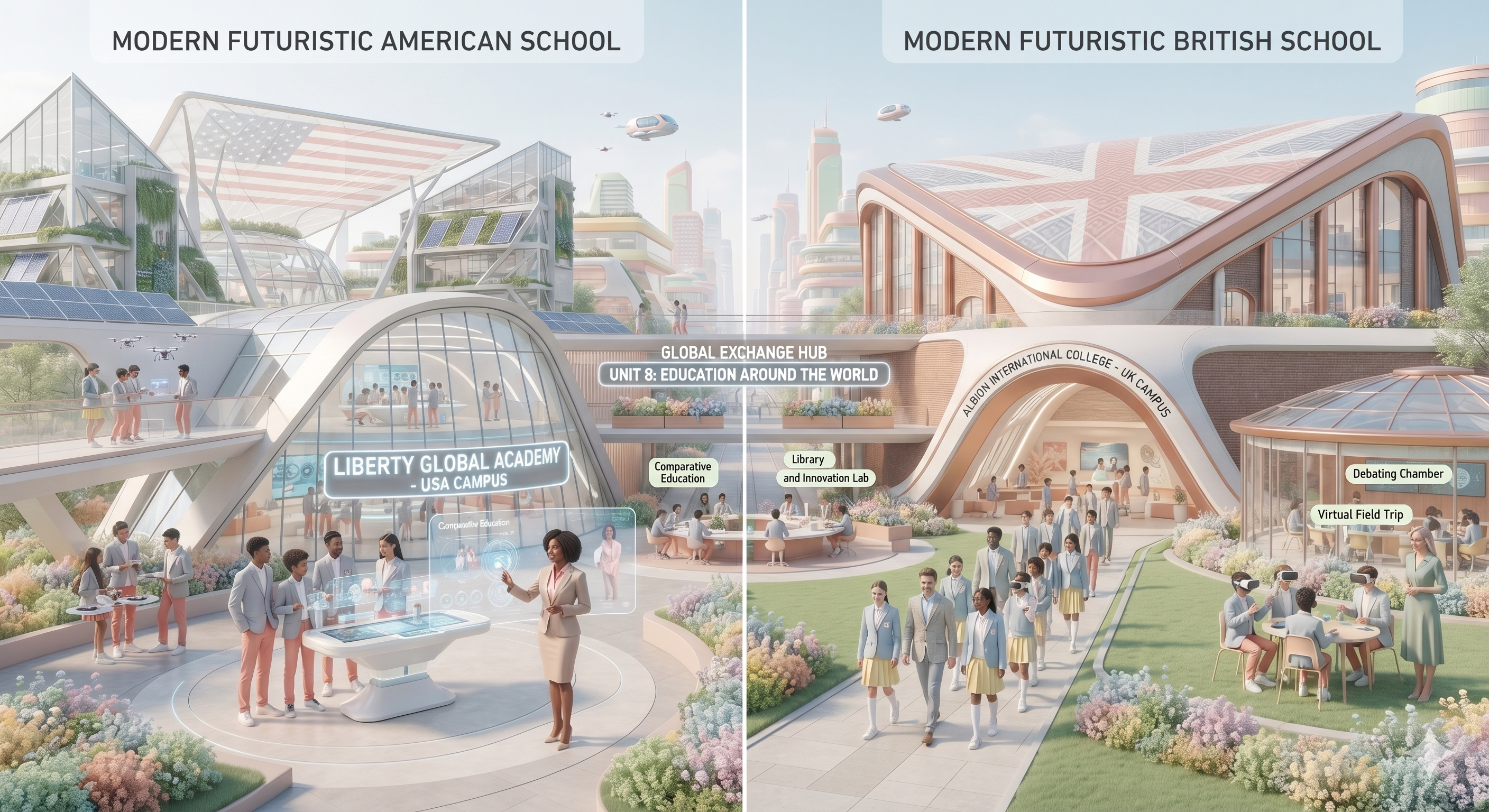
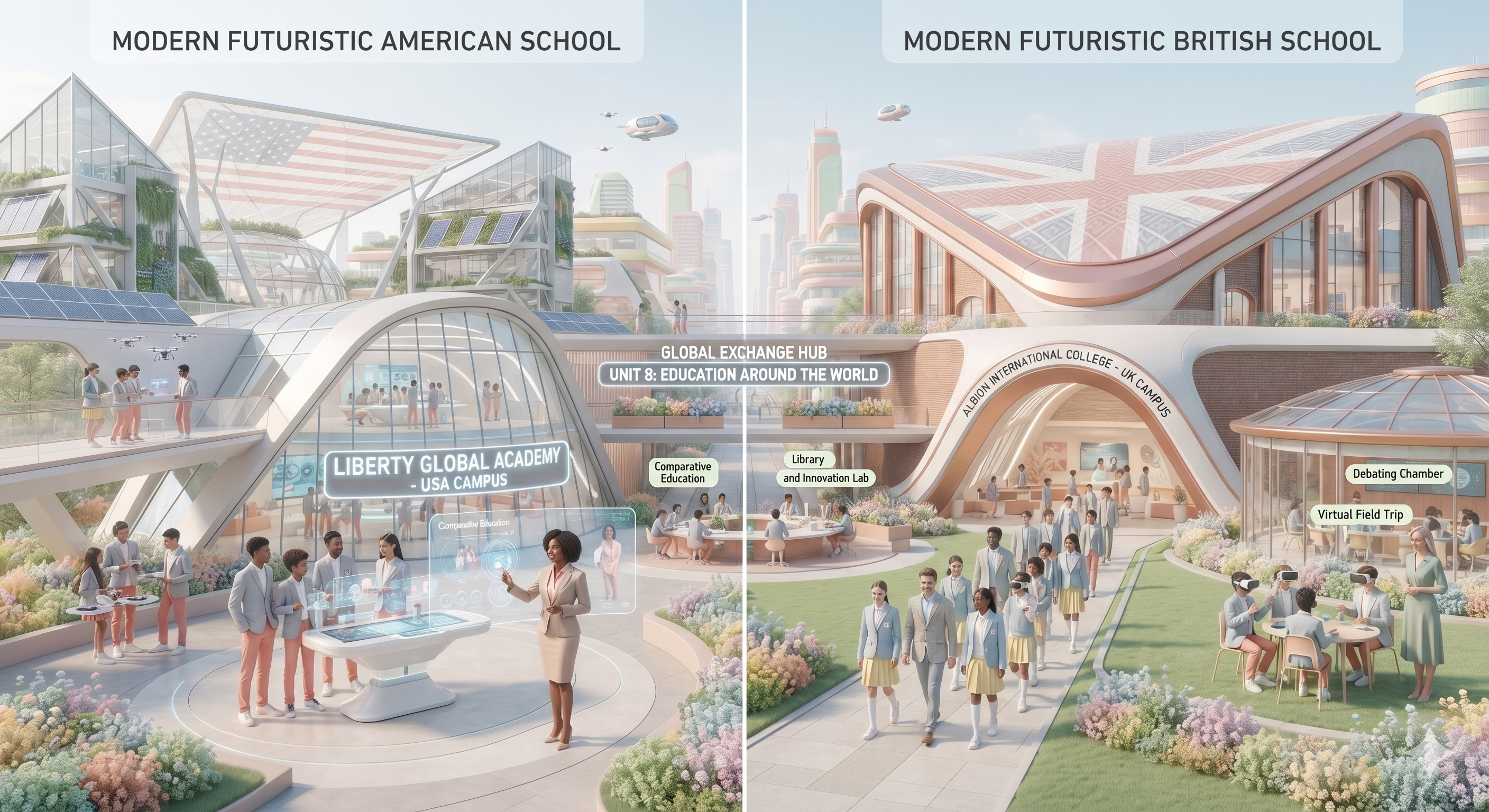
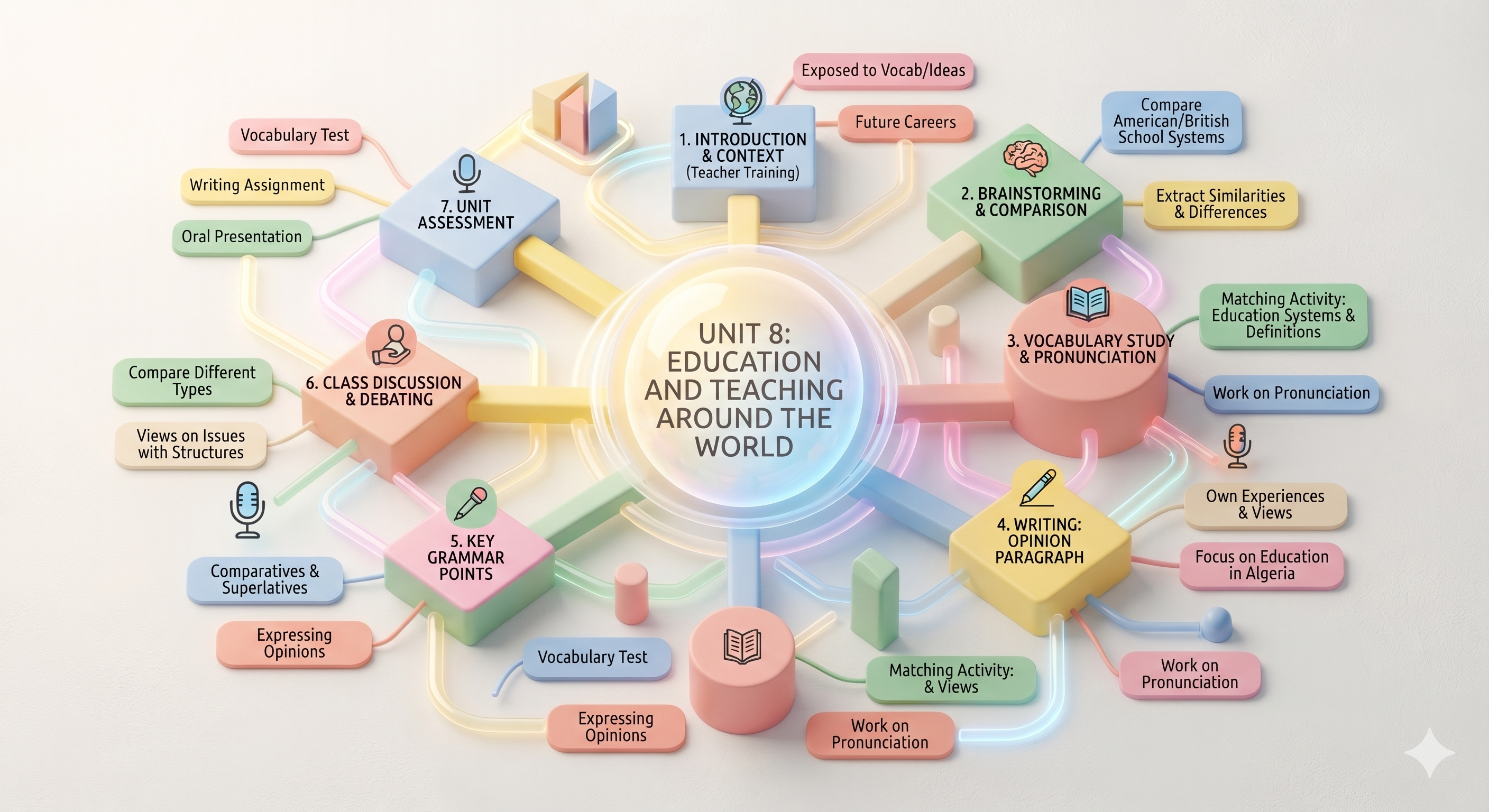 Brief Description: This unit explores diverse educational landscapes, encouraging students to analyze international schooling systems. It integrates linguistic skill development—specifically vocabulary acquisition, pronunciation, and grammatical structures like comparatives and superlatives—with critical thinking exercises regarding global educational practices.
Target Audience: First-year bachelor’s degree students in primary education at the Higher Normal School (ENS).
-
-
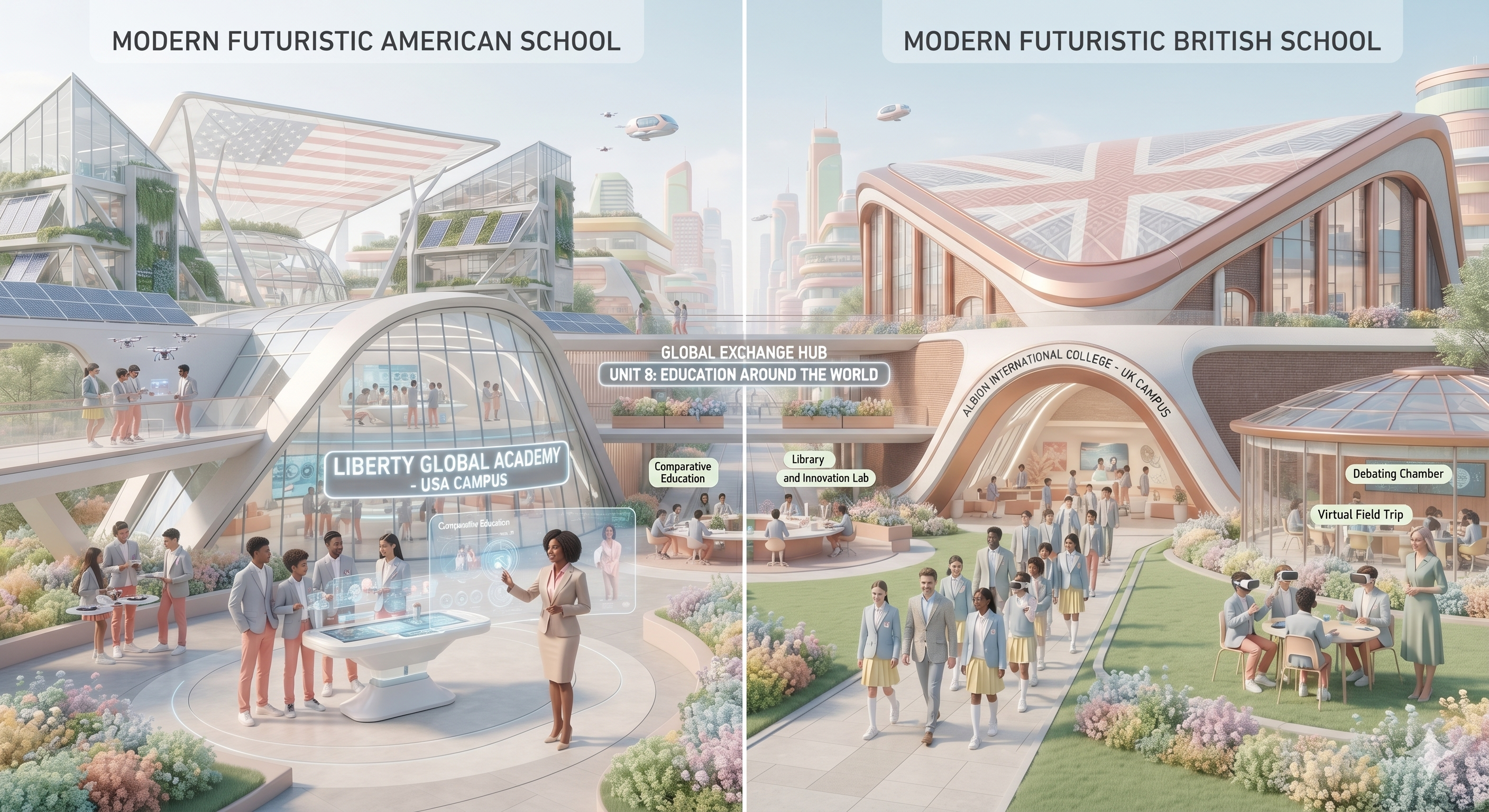
Comparative Analysis: Enable students to identify similarities and differences between various international education systems, such as the American or British models.
-
Professional Preparation: Expose future teachers to career-relevant vocabulary and pedagogical concepts.
-
Communicative Competence: Develop students' abilities to express informed opinions on education issues, both in written paragraphs and through structured class debates.
-
Critical Reflection: Encourage students to evaluate their own educational experiences and views, specifically within the context of Algeria.
-
-
Opened: Sunday, 12 July 2026, 12:00 AMDue: Sunday, 19 July 2026, 12:00 AM
-
Opened: Sunday, 12 July 2026, 12:00 AMDue: Sunday, 19 July 2026, 12:00 AM
-
-
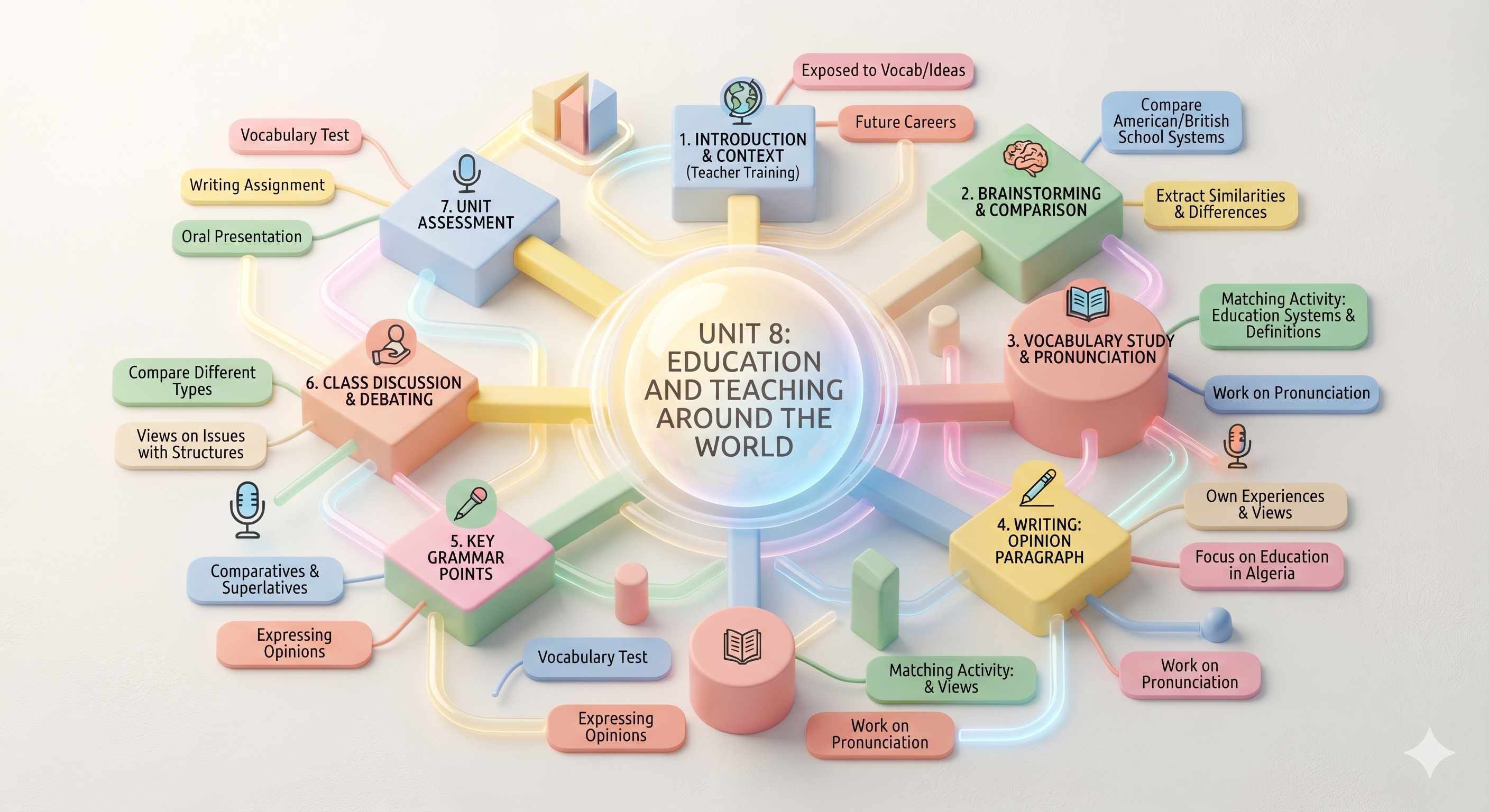 Brief Description: This unit explores diverse educational landscapes, encouraging students to analyze international schooling systems. It integrates linguistic skill development—specifically vocabulary acquisition, pronunciation, and grammatical structures like comparatives and superlatives—with critical thinking exercises regarding global educational practices.
Target Audience: First-year bachelor’s degree students in primary education at the Higher Normal School (ENS).
-
-
Comparative Analysis: Enable students to identify similarities and differences between various international education systems, such as the American or British models.
-
Professional Preparation: Expose future teachers to career-relevant vocabulary and pedagogical concepts.
-
Communicative Competence: Develop students' abilities to express informed opinions on education issues, both in written paragraphs and through structured class debates.
-
Critical Reflection: Encourage students to evaluate their own educational experiences and views, specifically within the context of Algeria.
-
-
-
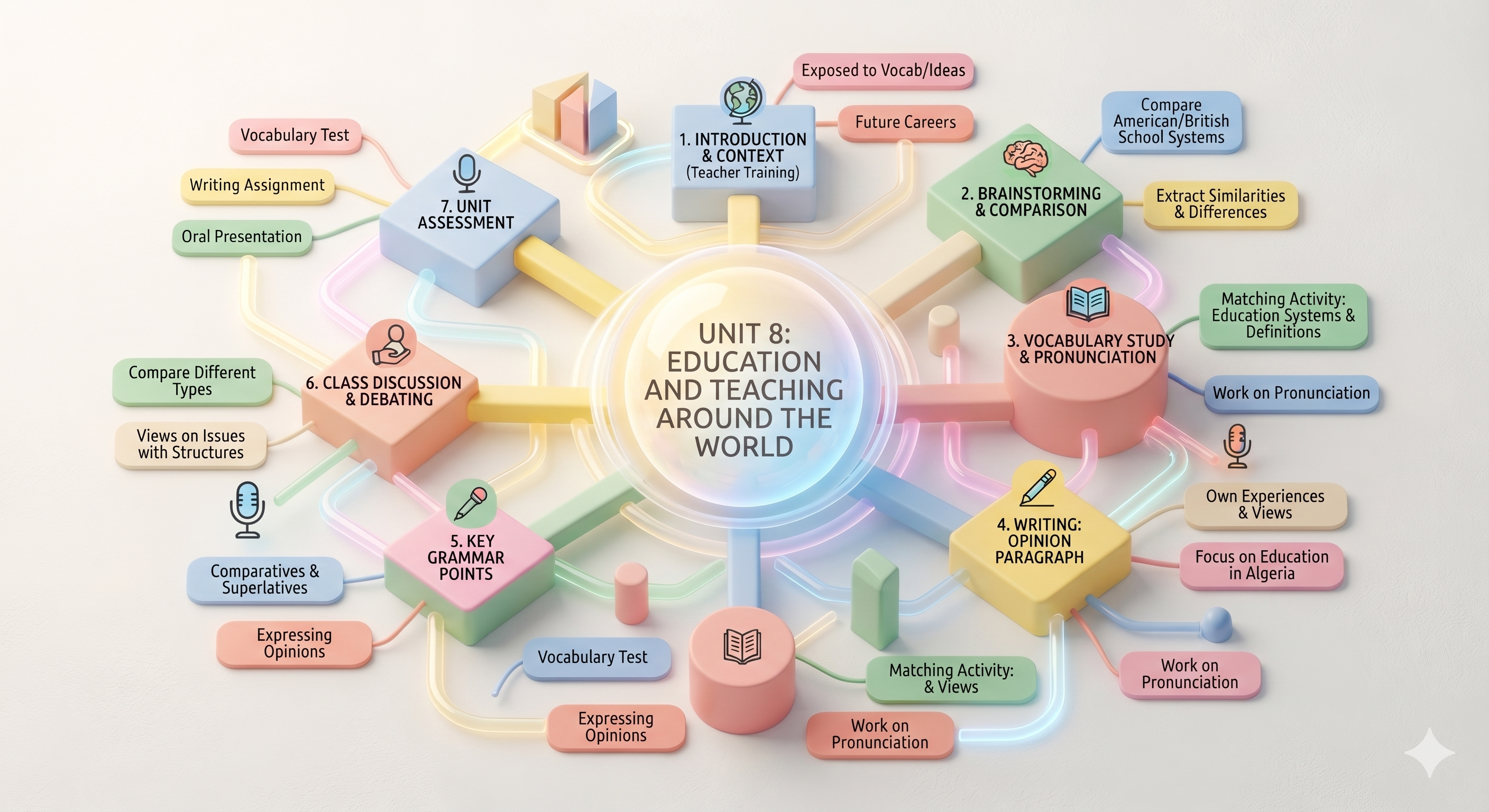
Brief Description: This unit explores diverse educational landscapes, encouraging students to analyze international schooling systems. It integrates linguistic skill development—specifically vocabulary acquisition, pronunciation, and grammatical structures like comparatives and superlatives—with critical thinking exercises regarding global educational practices.
Target Audience: First-year bachelor’s degree students in primary education at the Higher Normal School (ENS).
-
-
Comparative Analysis: Enable students to identify similarities and differences between various international education systems, such as the American or British models.
-
Professional Preparation: Expose future teachers to career-relevant vocabulary and pedagogical concepts.
-
Communicative Competence: Develop students' abilities to express informed opinions on education issues, both in written paragraphs and through structured class debates.
-
Critical Reflection: Encourage students to evaluate their own educational experiences and views, specifically within the context of Algeria.
-
-