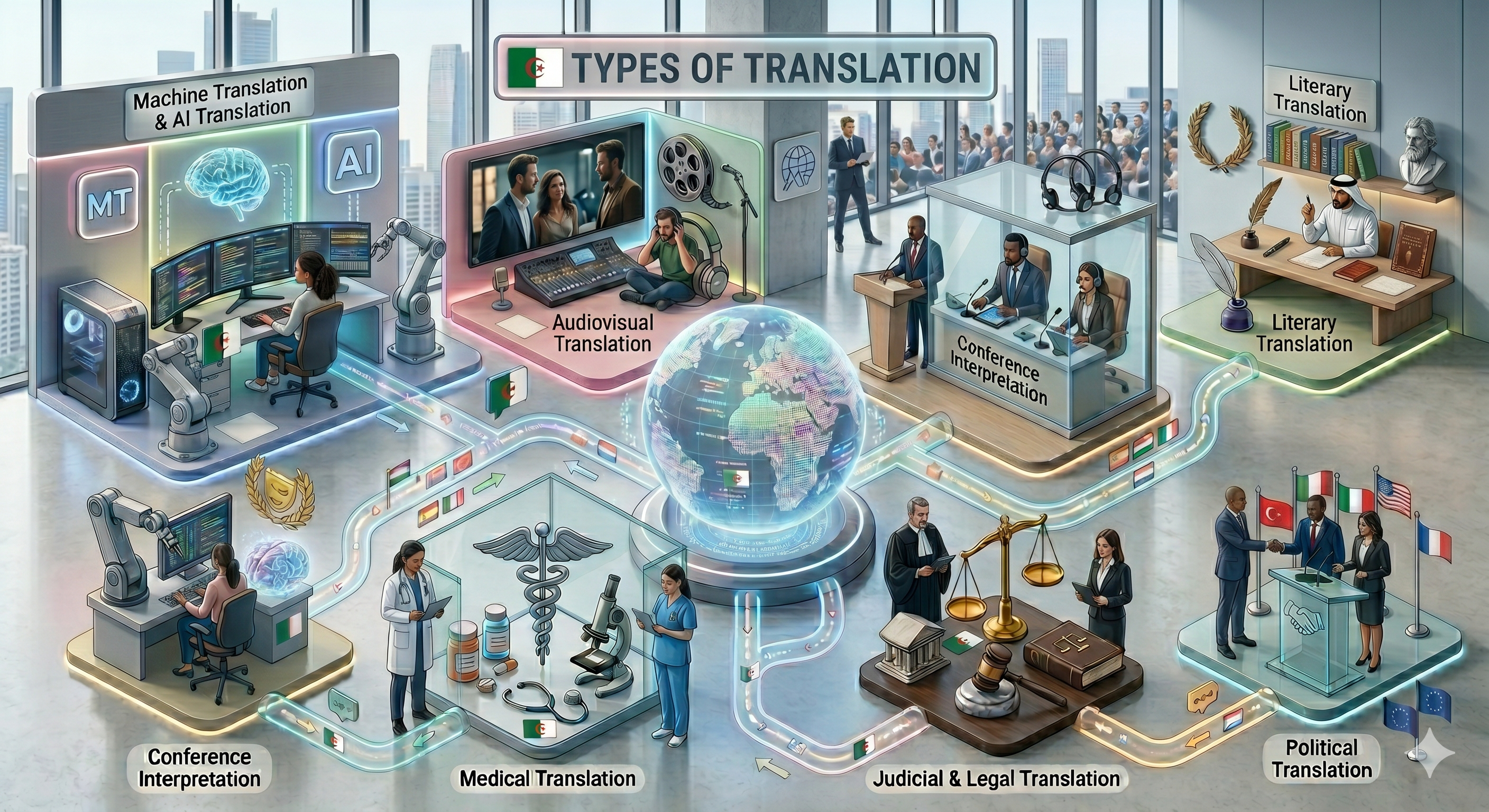
Types of Translation
Résumé de section
-
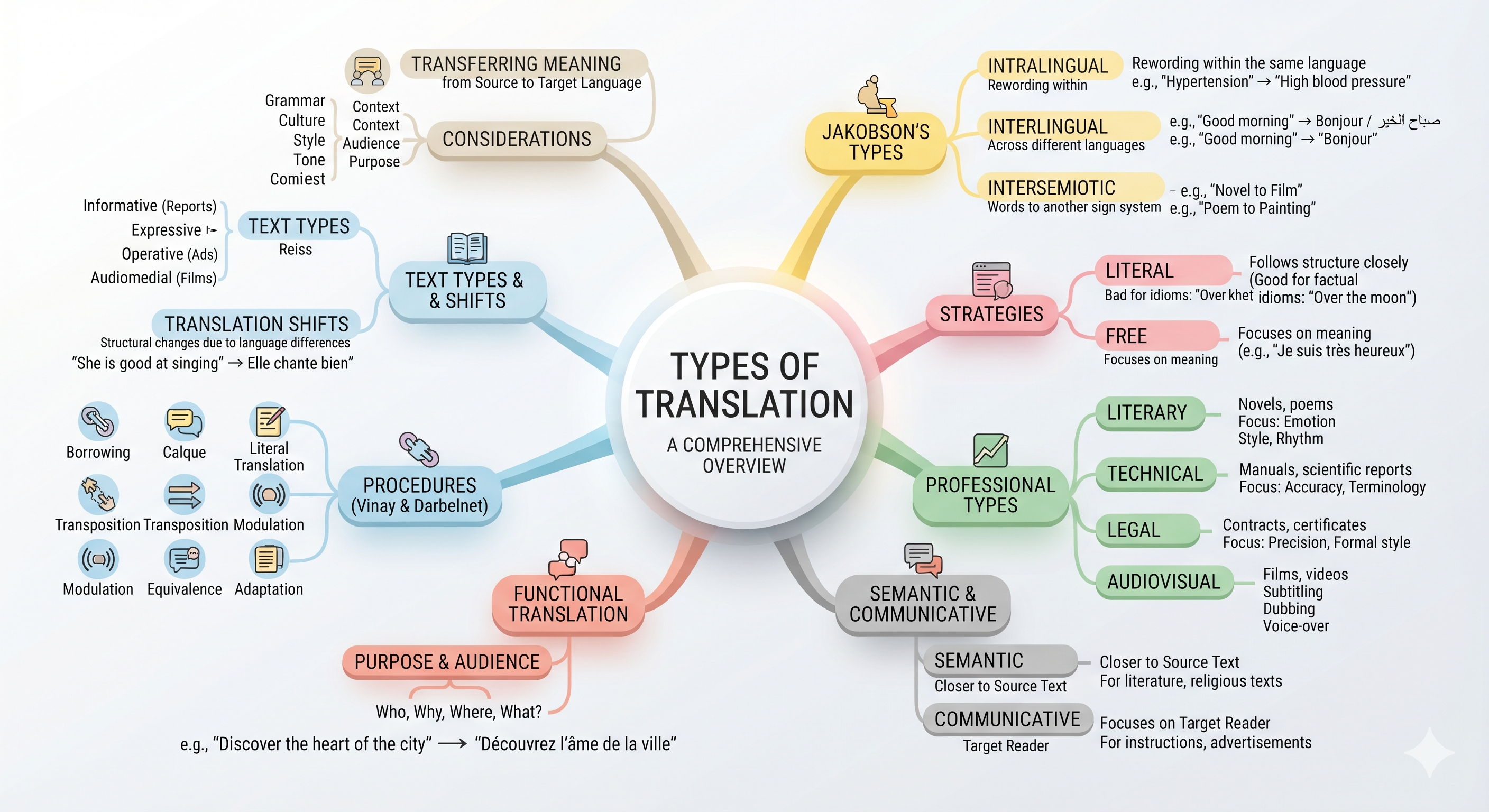 Brief Description
This course introduces the main types of translation and their role in literary, cultural, and communicative contexts. It presents translation not only as a transfer from one language to another, but also as a process of interpretation, rewriting, adaptation, and cultural mediation. The course covers major categories such as intralingual, interlingual, intersemiotic, literal, free, semantic, communicative, literary, technical, legal, audiovisual, and functional translation.
Target Public
This course is intended for Master’s students in Modern and Contemporary Criticism. It is especially relevant for students interested in literature, comparative studies, cultural criticism, discourse analysis, and the relationship between texts, languages, and cultures.
By the end of the course, students will be able to:
- Identify the main types of translation.
- Understand translation as a linguistic, literary, and cultural practice.
- Distinguish between different translation methods and strategies.
- Analyze how meaning, style, culture, and context influence translation.
- Relate translation to modern and contemporary critical approaches.
- Develop a critical awareness of translation as interpretation, rewriting, and cultural transfer.