
Class Discussion and Debating
- Students can compare different types of education systems.
- Students express their views and opinions on education issues using appropriate structure.
Class discussion and Debating
Introduction
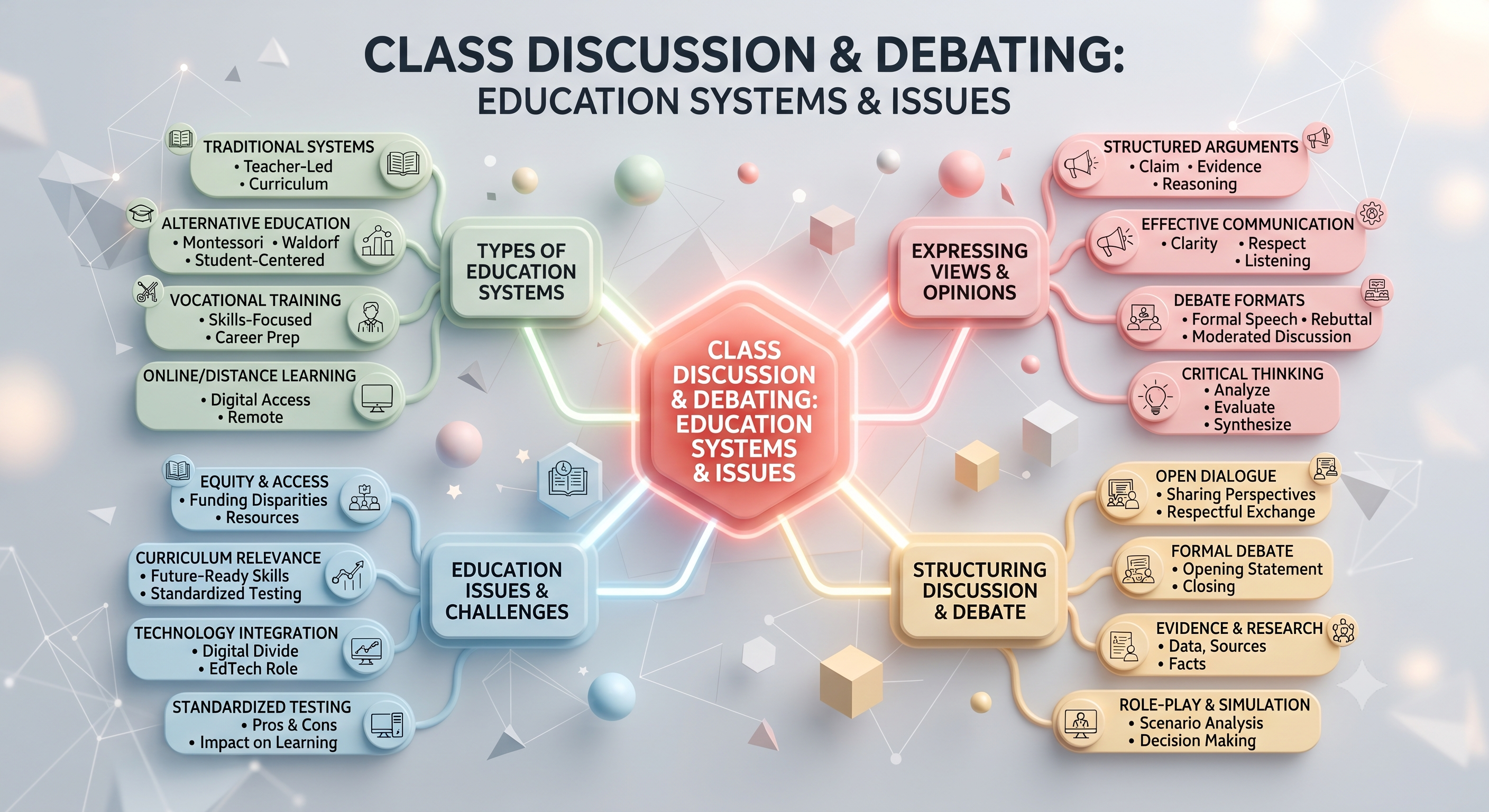
The modern classroom serves as a microcosm of society, where students are tasked not only with absorbing information but also with critically evaluating the mechanisms that govern their learning. By engaging in structured discussions and debates, students move beyond passive reception, transforming into active participants in their academic environment. This practice fosters a deeper understanding of diverse education systems while simultaneously equipping learners with the essential skills to express informed opinions in a structured and professional manner.
Body: Analyzing Systems and Cultivating Discourse
The effectiveness of this pedagogical approach relies on two primary pillars:
-
Comparative Analysis of Systems: When students compare different educational models—such as traditional teacher-led environments, student-centered alternative approaches like Montessori, or vocational training—they gain perspective on the strengths and limitations of their own experiences. This comparative lens allows for a nuanced understanding of global educational challenges, such as funding disparities, technology integration, and the evolving relevance of curricula in a future-ready world.
-
Structuring Expression and Argumentation: Debating requires more than mere opinion; it demands the implementation of logical frameworks. By utilizing structures such as claims supported by evidence and reasoning, students learn to articulate complex thoughts with clarity. Engaging in formal debate formats, such as moderated discussions or structured rebuttals, further compels students to practice active listening, maintain respect for opposing viewpoints, and synthesize information into critical, well-supported arguments.
Conclusion
In summary, integrating debate and discussion into the curriculum bridges the gap between theoretical knowledge and practical communication. By analyzing various education systems through a critical lens and adhering to rigorous standards of discourse, students develop the analytical and interpersonal skills necessary to navigate intellectual challenges. Ultimately, this approach empowers students to become thoughtful, articulate, and engaged citizens who are prepared to contribute meaningfully to ongoing conversations about the future of education.